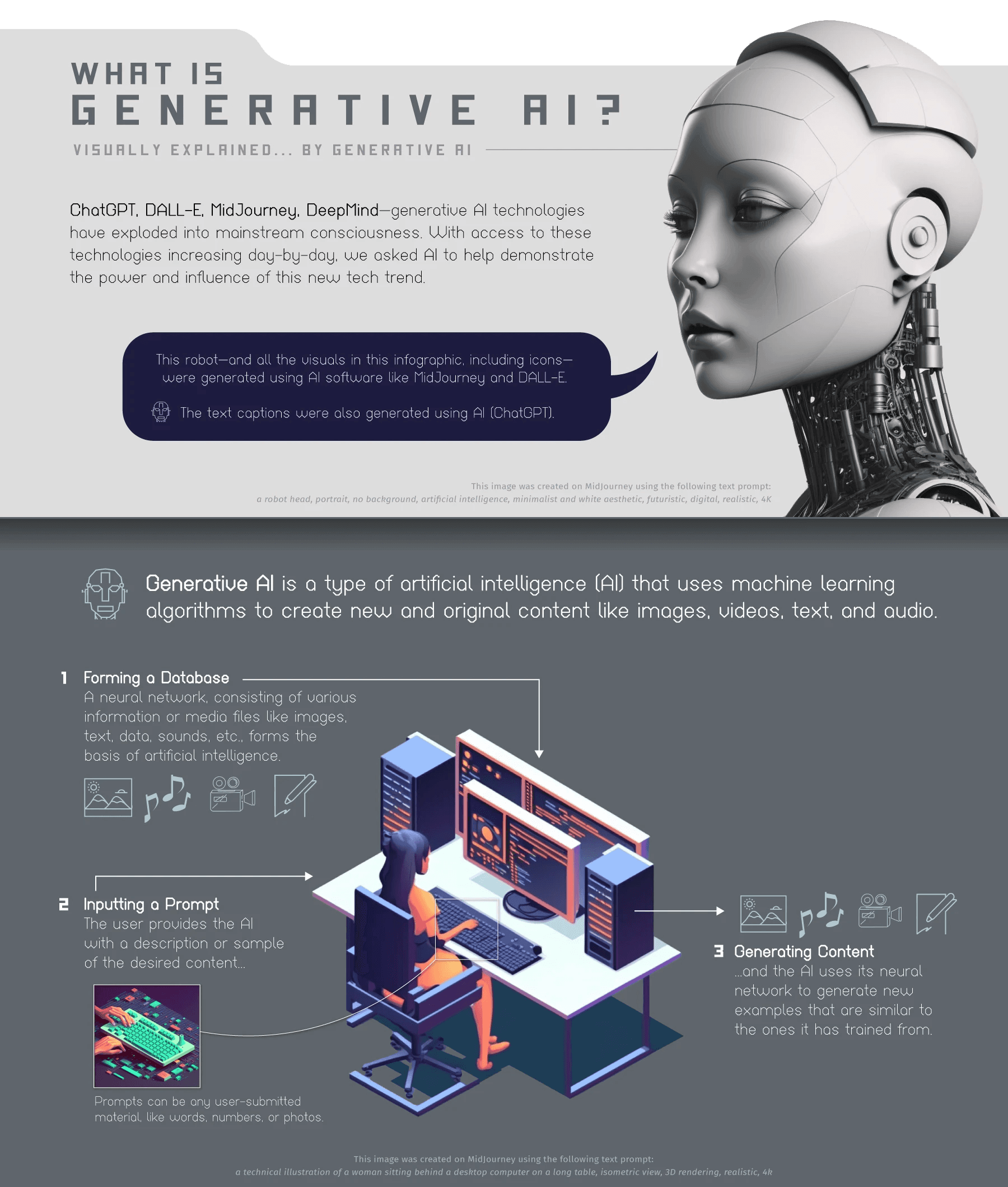
Generation AI, or Gen AI, represents the generation growing up in a world where artificial intelligence is deeply integrated into daily life, shaping education, work, and social interactions, influencing how they learn, create, and adapt in an AI-driven society. Understanding their relationship with and adaptation to AI is crucial for shaping future technology, ethics, and societal norms.
PHASE 1 | Understanding the Landscape
ChatGPT is a Large Language model developed by OpenAI, based, based on the GPT 3.5 architecture. It can generate human-like text based on the input prompts, answer questions and perform a variety of natural language processing tasks. It was trained on a massive dataset of internet, text to learn patterns and relationships in language
Contextual Understanding
Language genaration Capabilities
Task Adaptability
Multilingual Proficiency
Scalability
Zero Shot & Few Shot Learning
Fine-Tuning Potential
ChatGPT
57M
Active Users in the first month of release
570GB
Close to 5.7 Billion pages of text
text
95%
Prone to erros-
repetition, Lack of orginality, Factuality
accuracy
90
th percentile
GPT-4 has capabilities in Top competitve exams
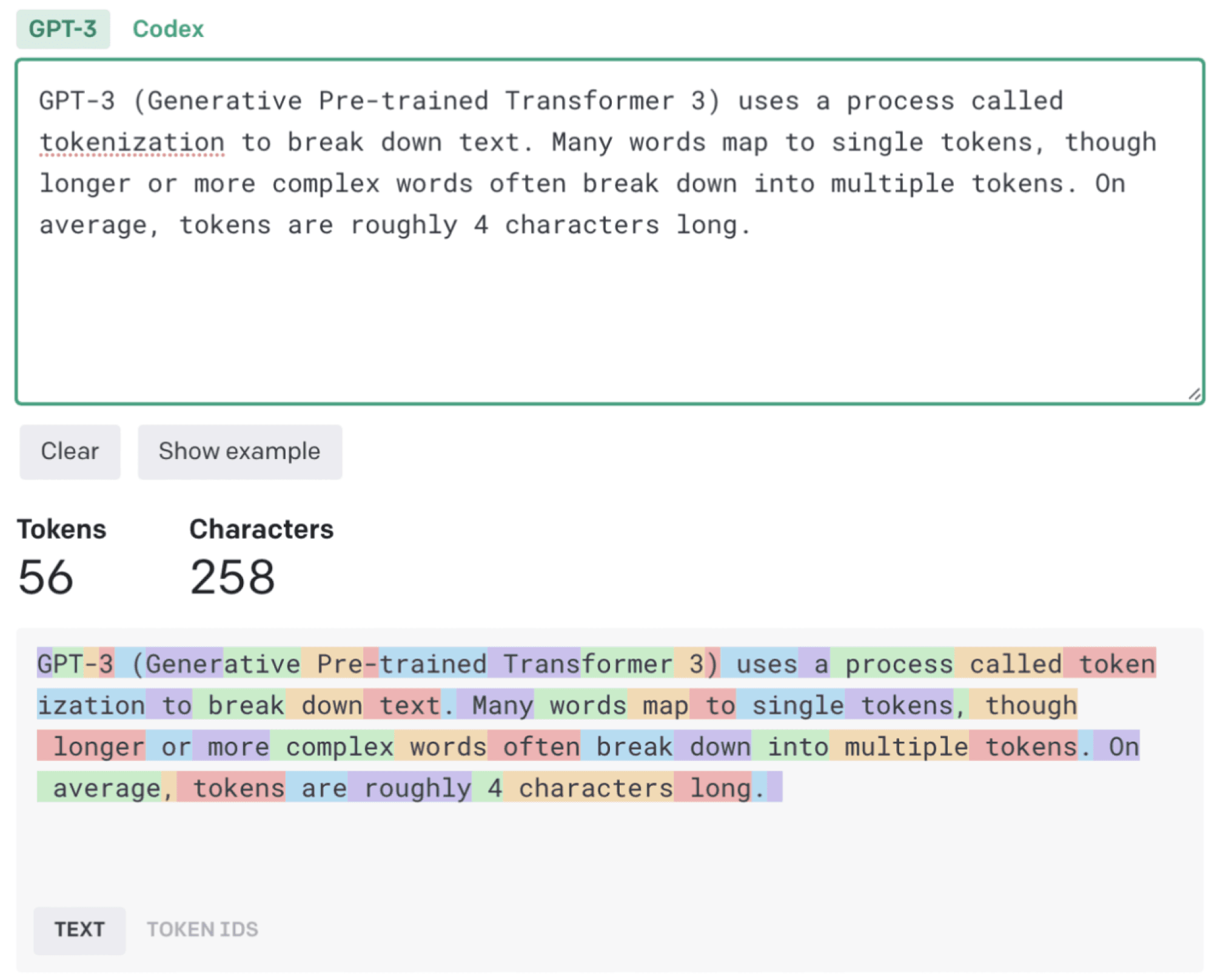
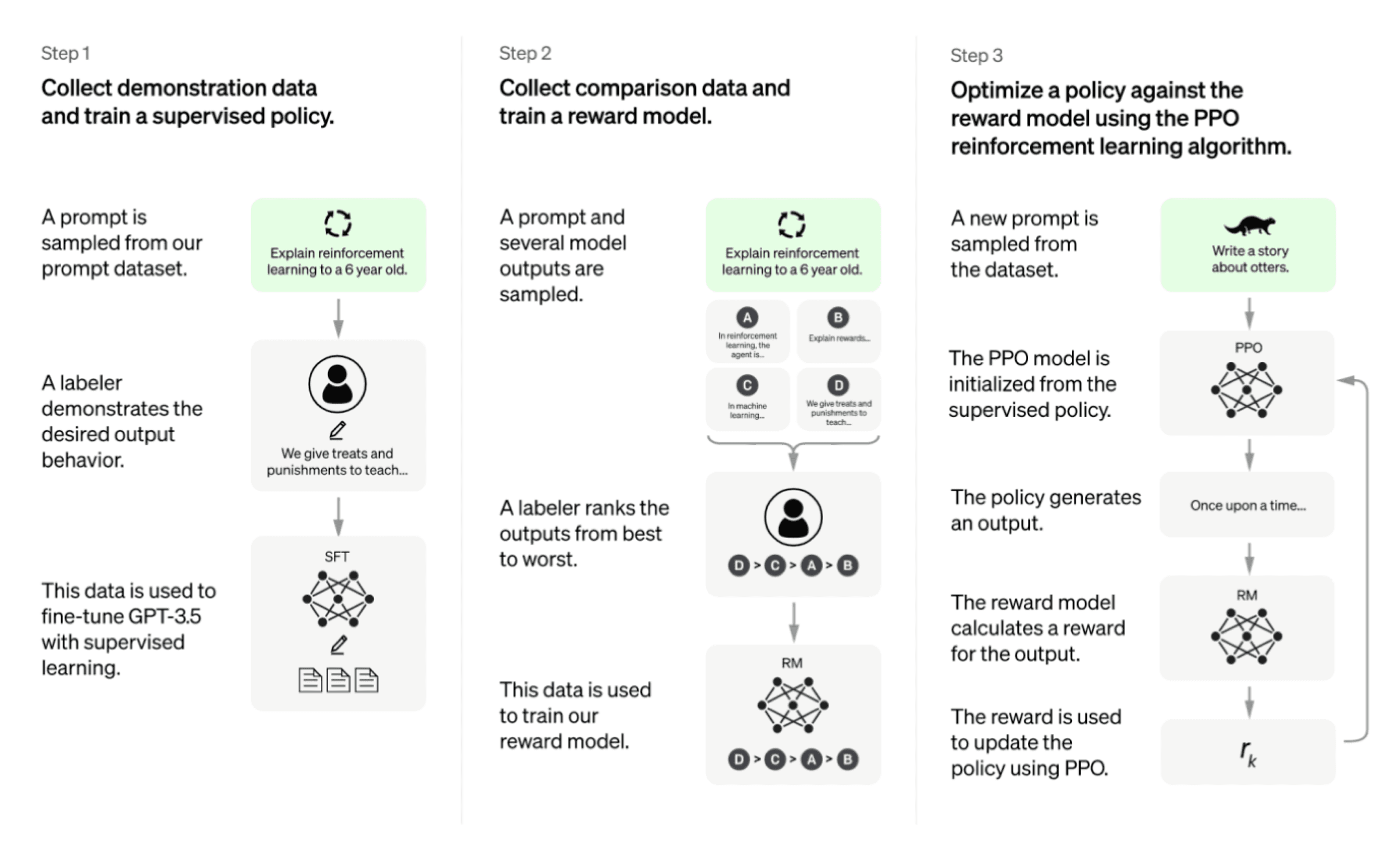
How does it operate?
This humongous dataset was used to form a deep learning neural network—a complex, many-layered, weighted algorithm modeled after the human brain—which allowed ChatGPT to learn patterns and relationships in the text data and tap into the ability to create human-like responses by predicting what text should come next in any given sentence.
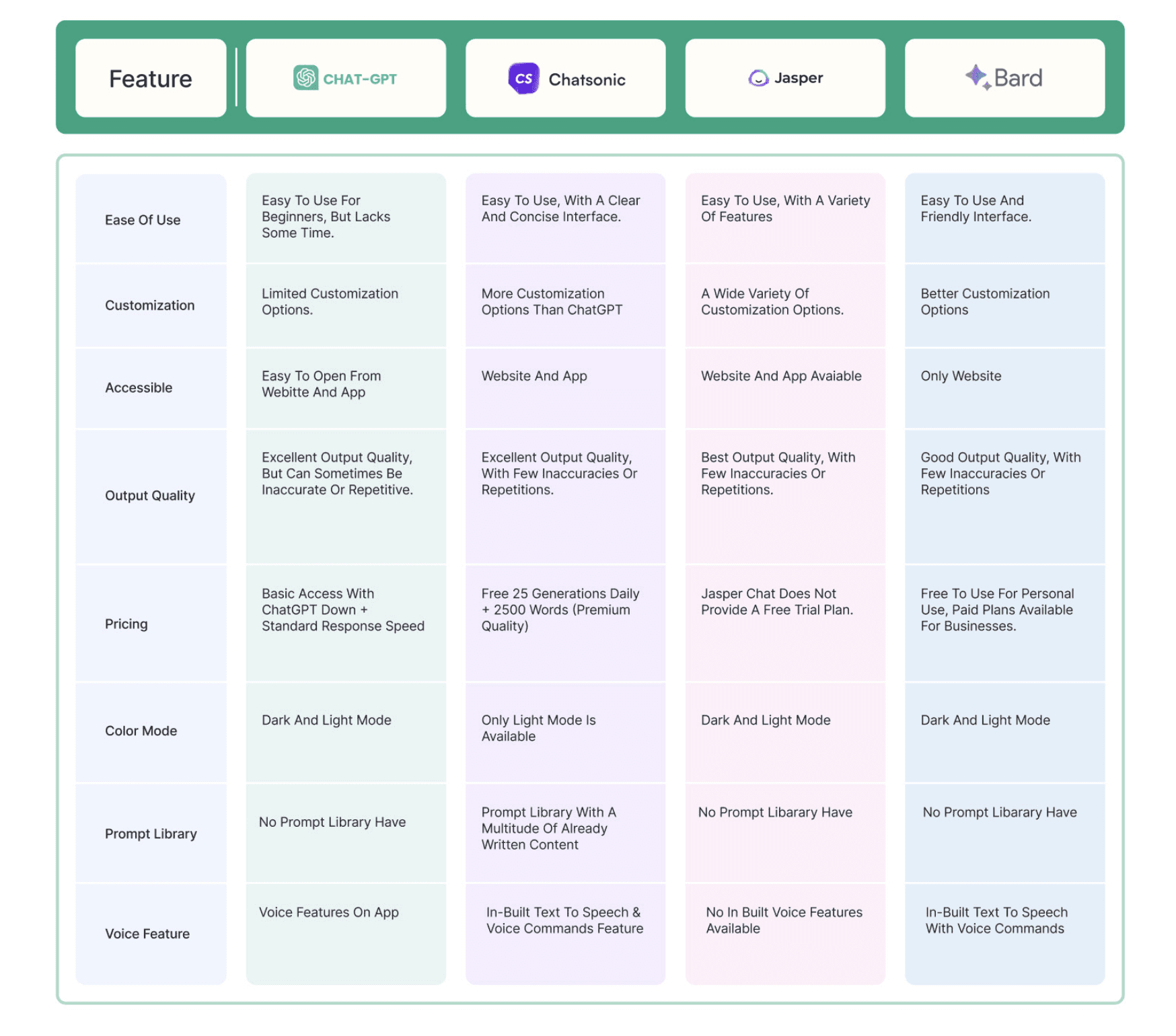
Competitor comparison

76%
AI models should be required to be trained on datasets that have been fact-checked
6%
Using ChatGPT generated content is not plagiarism
20%
14%
11%
19%
11%
10%
Searching for Information
Novelty
Academic Purposes
Creating Content
Recommendations
Writing code
What do people use ChatGPT for?
53%
can't tell if the content is generated by ChatGPT
71%
would lose trust if they know content has been created by ChatGPT
Source Tidio
Global use-cases and fears about ChatGPT

Why does ChatGPT need to evolve?
There are increasing concerns and conversations over the functioning and processes adhered to by ChatGPT.Deep-diving into why and what the users are feeling was crucial to this.
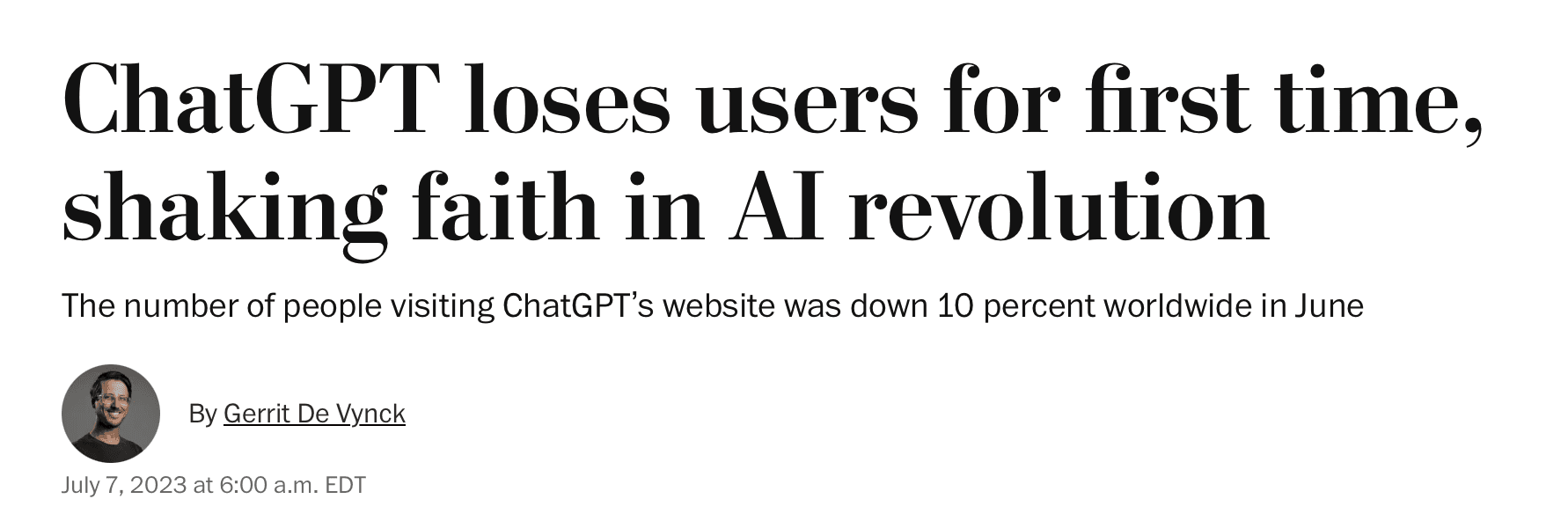
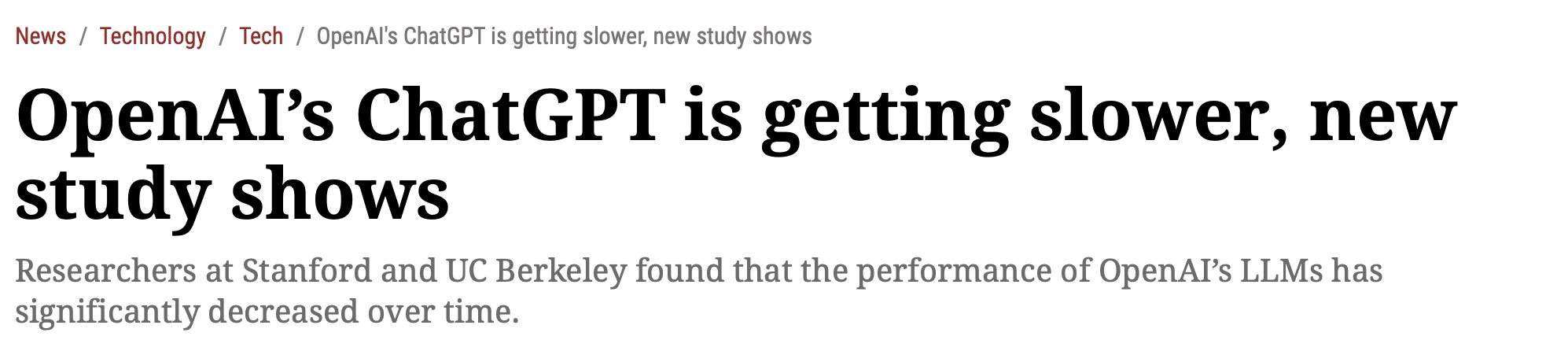
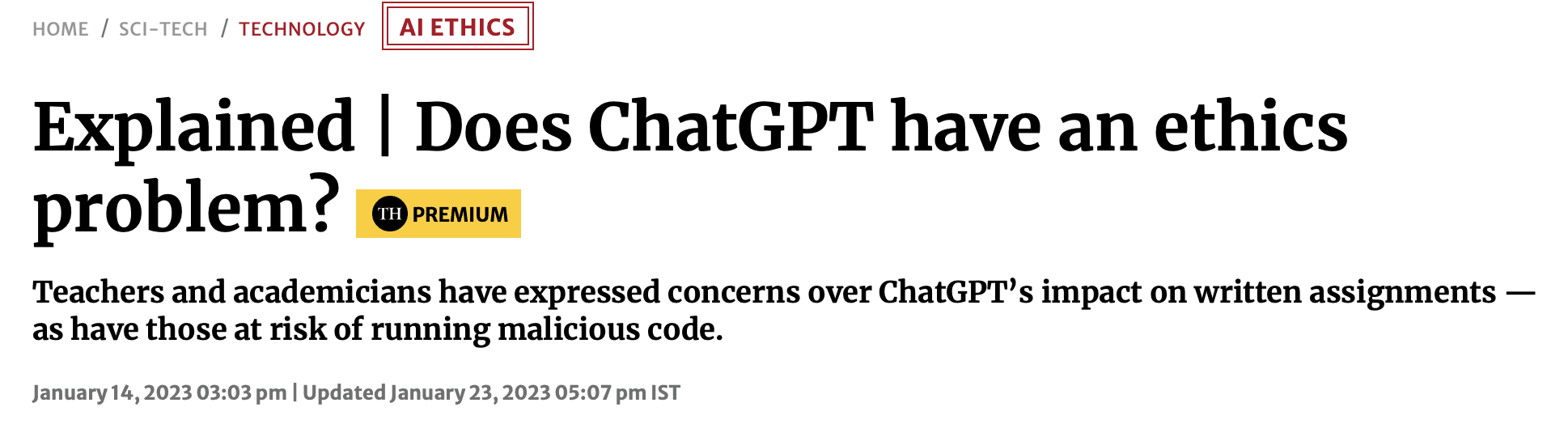
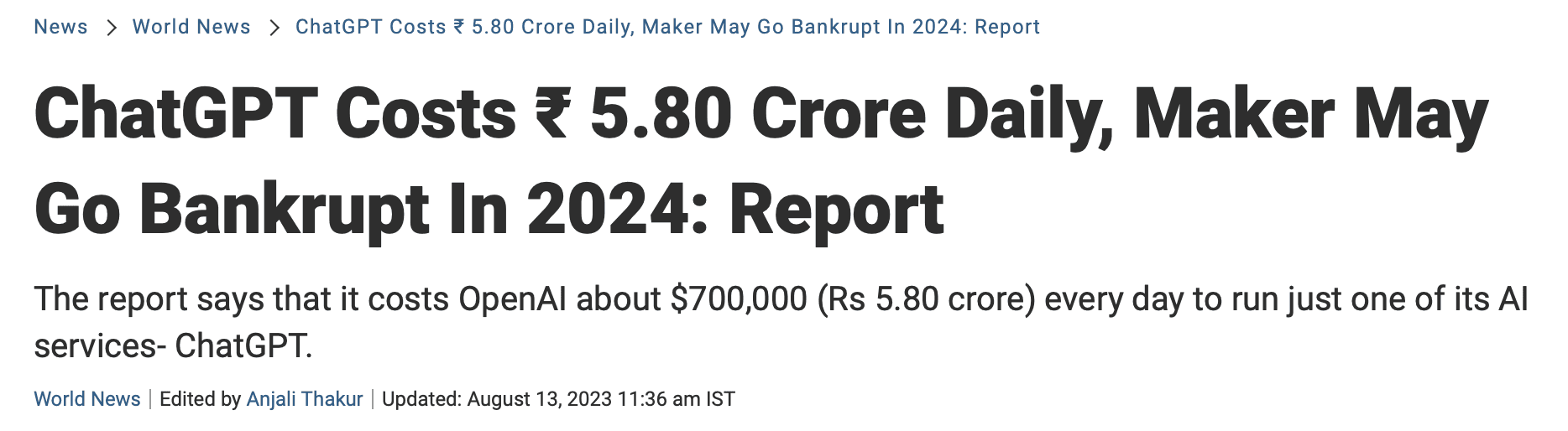

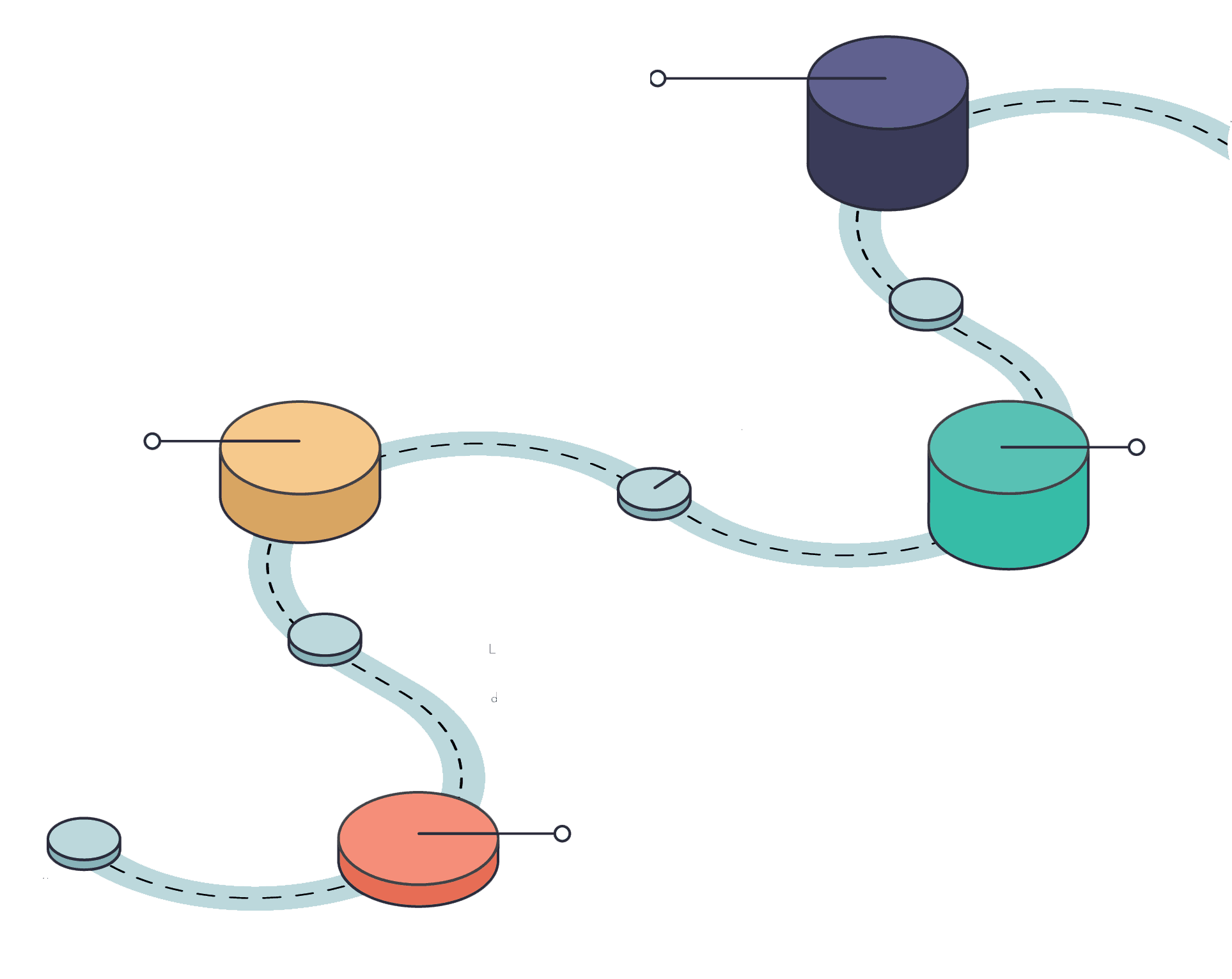
Phase 1 | Understanding the landscape of Gen AI
Project Pipeline
Phase 2 | Primary Research
Usage patterns and Competitor mapping
Product Intent vs Product Perception
Exploring existing behaviours displayed in Human-machine-AI Interactions
Research tool creation
Key Insights- Auto Netnography, Focus group.
Ux heuristics study
Intendended and vulnerable audience mapping
Hypothesis creation and validation-Stimulation
Behavioural mapping and triggers.
Insight generation
problem statement
Phase 3 | Sense Making
Mapping and UI prototyping
Phase 4 | UX Strategies & Intervention
Questionnaire
/Pre-Task
Objective:Self-Perception Analysis
Personal Self concept (PSQ)
Academic Self-concept Scale (ASCS)
Personal Self Concept
Self fulfillment
Autonomy
Honesty
Emotional self-concept
Self-fulfillment (SF): how each person sees themselves in relation to achieving the objectives they have set themselves in their life, feeling fulfilled, meeting their targets, rising to challenges and their general achievements.
Honesty (HON): how each person sees themselves in the sense of being honest, upright and trustworthy in their behavior. It includes aspects such as being a valuable, honorable and consistent person who tries not to harm others; a man or woman of their word.
Autonomy (AU): how each person sees themselves as an individual equal to, but different from others. This includes aspects such as: the perception of oneself as someone who is independent and different from others; the feeling of not being dominated by others; being able to function without depending on others.
Emotional Self-concept (ESC): how each person sees themselves in the emotional dimension, in relation to the more impulsive and reactive aspects of their personality. This includes the perception of the following components: emotional balance, sensitivity, recognition and control of one’s emotions.
Academic Self-concept
Academic Self-Confidence
Academic Effort
/During-Task
Maintaining the Authenticity of Users' Original Intent: Empowering Interactions with ChatGPT (AU)
Confidence in - ChatGPT's Responses: Trust , your capabilities of articulation.(CON)
Recognition of your current knowledge level about the topic of enquiry (KL)
Humane-ness of the Interaction (HMN)
Sense of Learning and achievement ( LRN)
This part of the questionnaire was filled by the user after 2 prompts given to ChatGPT.
/Post-Task
Sense of Learning and achievement ( LRN)
Perception of ChatGPT
User needs, motivators and drivers
Seinse_Quest
/ Research_Tool_1
Interactive Netnographic Survey Experience
Analysing
Self Efficacy

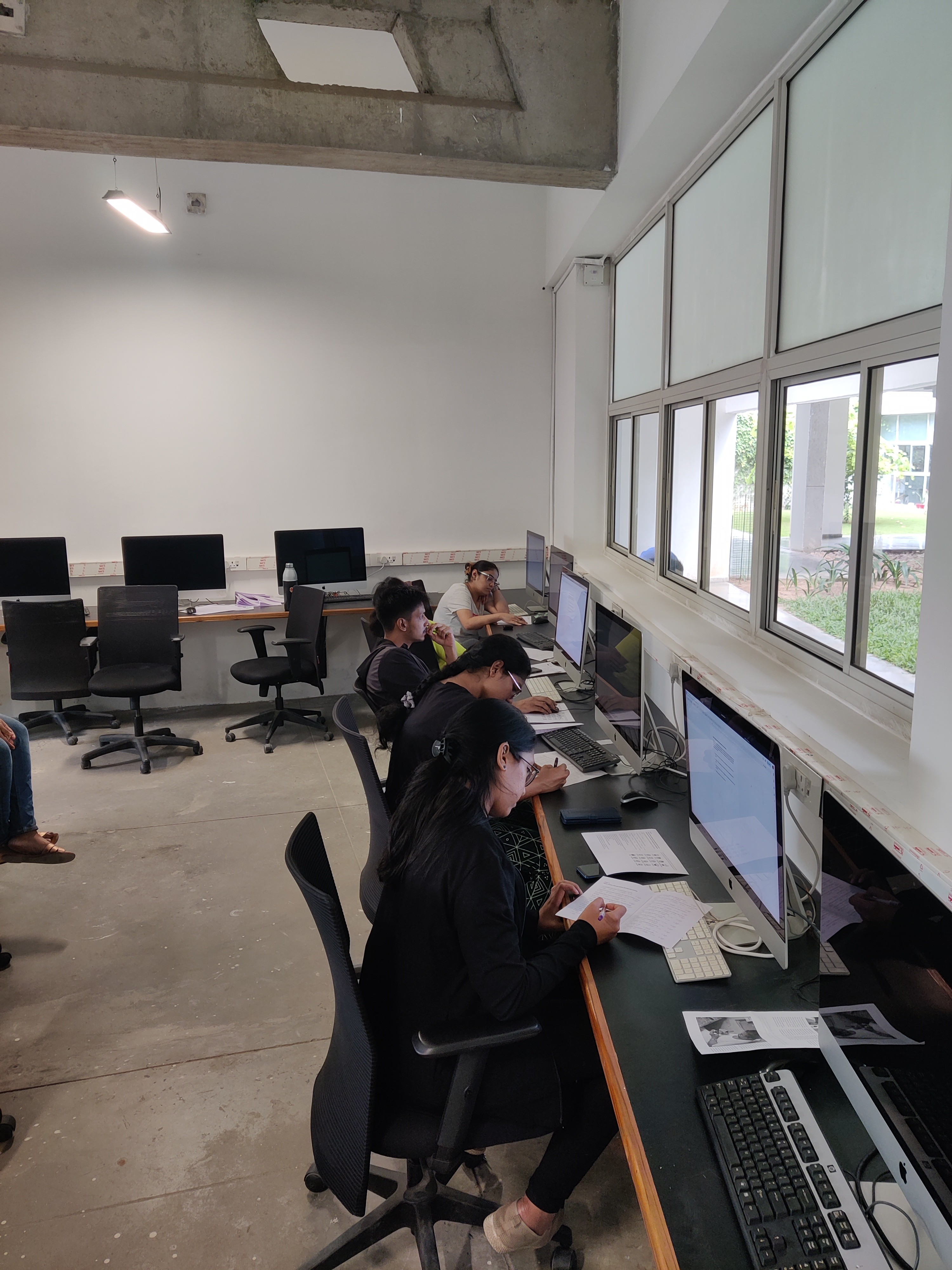
Primary Research
/ Exploring internal factors of user motivation
Seinse Quest is a tool designed to investigate the internal dependency factors leading to confirmation bias and dependency in ChatGPT
As we have to uncover the internal perceptions of self that an individual held we made a combination of experiences tapping different aspects
/ OBJECTIVE
Create an Experience to gather data and uncover hidden internal factors in play while the user interacts with ChatGPT. The following attributes were analysed:-
Relationship between Personal self-concept and Academic self-concept with dependency on the platform
Awareness about maintaining the originality of your initial thought/intent to visit in the platform- Empowering Interactions with ChatGPT
User needs, perceptions and drivers
Particpants overview:
Number:25
Background:
Students of NID-1st year and final year
/Tools used
AI-Assisted Task completion
Structured Questionnaire- Pre, During and Post Activity
Netnography of the task
Supervised task with netnography
Outcome
Analysing the course of interaction of users with ChatGPT
Originality of the user's thought in the end write-up of the task and awareness regarding it.
Task: Creating a new brand (no limitation on any domain)
Imagine that you are part of a team tasked with creating a new brand that resonates with your consumers. You have access to ChatGPT, an AI-powered assistant that can provide insights and ideas to shape your brand. Your task is to collaboratively use ChatGPT to develop and define this new brand.
Brand Vision and Values: brainstorming and articulation of their brand’s vision and values
Audience Type: brainstorming and articulation of the type of audience you want to cater to
Brand Identity and story: make a quirky tagline and a background story about how you started this
Offerings: products, sku’s, skills, services etc

To view detailed data
analysis. Click here
/Strengths of the Tool
The combination of the tool is such a way that qualitative inputs can be quantified to get clearer insights
Capturing both virtual, self and combination of both behaviours
Interactive task gave awareness about the user about the capabilities of ChatGPT
/Limitations of the Tool
As the attempt is made to capture the inner unconscious beliefs, the whole activity itself might bring the need to answer subjectively
The Data of a completely unaware user was difficult to process and analyse
Simulation
/ Research_Tool_2
Behaviours exhibited in Interaction with ChatGPT were simulated under context and conditions to prove/disprove hypothesis created.
/ HYPOTHESIS
We believe that
Users have a low priority of trust while consuming information which leads to retention of user in platform
priority of trust in user reduces as users receive validation for their outputs
We believe that
Unawareness of capabilities of ChatGPT makes the user retain in the Platform
We believe that
/ACTIVITY

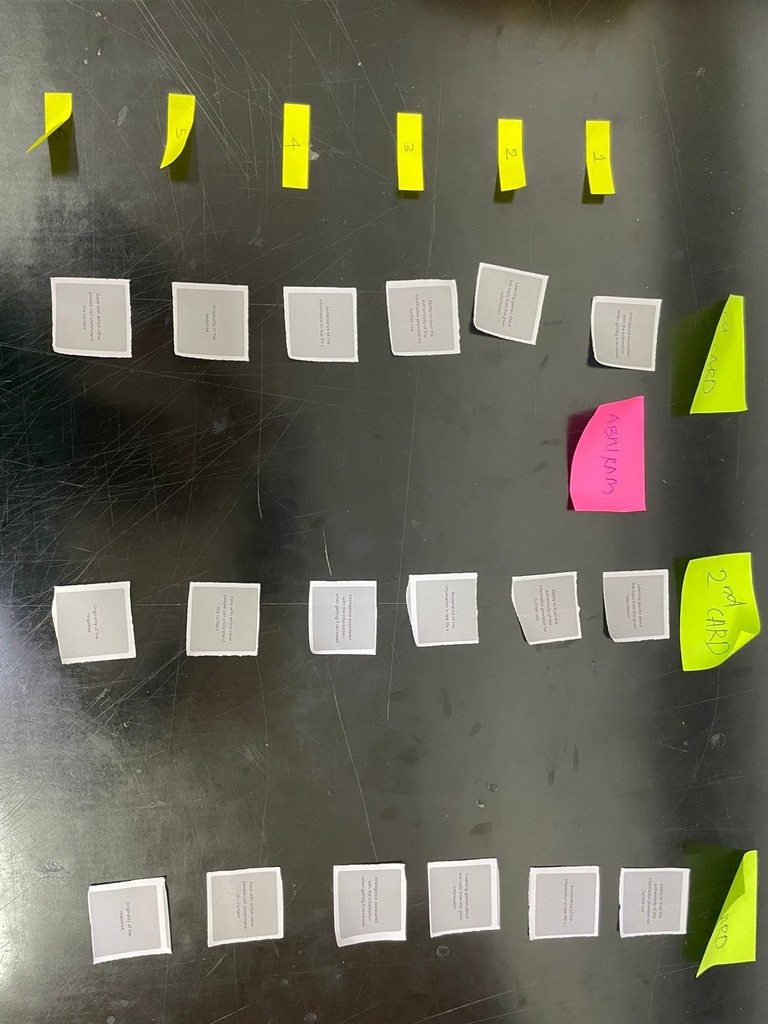
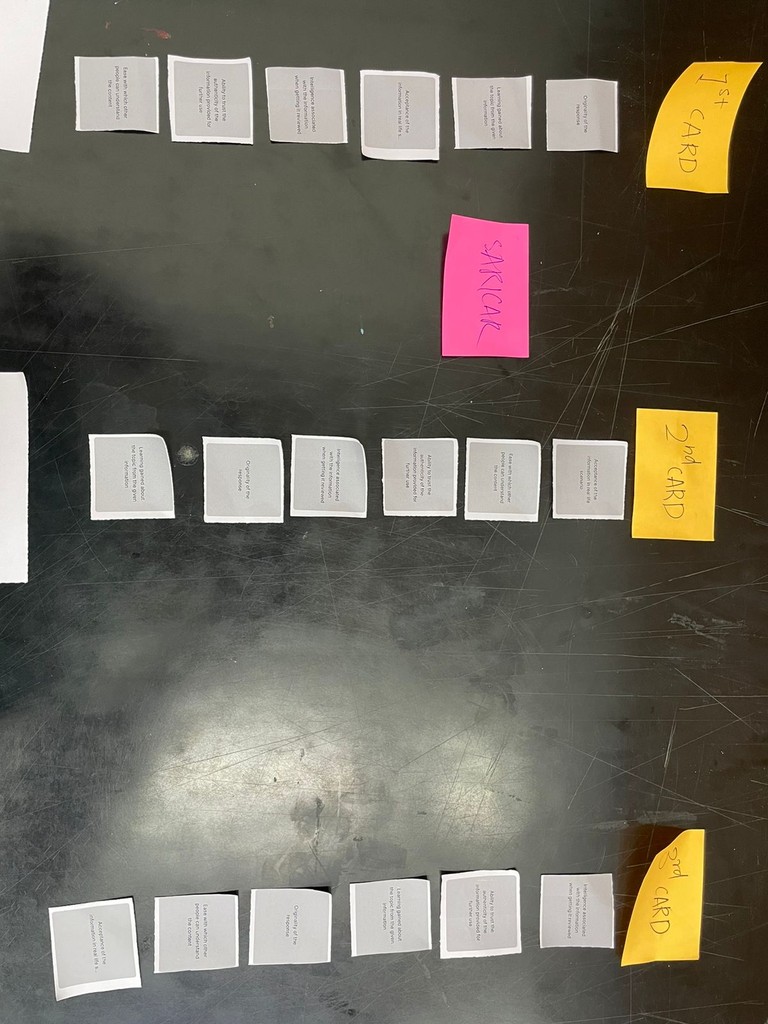
Participants were provided with information cards in an area of their liking in the span of 2 rounds- info in cards in both the rounds generated by ChatGPT (User unaware about the source_- one right & one factually wrong)
Information card provided
Respondents asked to rank these cards in priority with 1- being highest priority and 6- having least priority
ROUND 1
ROUND 2
2nd Information card provided
Respondents were asked to rank these cards in priority with 1- being the highest priority and 6- having the least priority
3rd Information card provided
RespondThis card reveals that one among the both card were factually wrong and a minimum validation scenario is presented in the card. They are asked if they would like to rearrange their priority cards.
/ FINDINGS
All the three hypotheses were proven. Even though the ranking of trust went higher after knowing that information may be false, all the respondents said that they would go back to the source. The Unaware user was fascinated by the concept of ChatGPT and would want to go back again to explore more.
/ Research tool
INSIGHTS
Social comparison: Human vs AI generated output
With the usage of AI in vast use cases, the expectations and demands from users have evolved across different social settings. AI-generated output displayed more 'Signs of Intelligence' in comparison to human output and a sense of lack arose in the user. This comparison led to a decrease in self-efficacy in the user which led to validation-seeking behaviour.
Human-Human Interaction
High/Low Trust, High/Low Confirmity
Seeking Information vs Seeking Approval
As the user's initial Intent is to seek information arising from curiosity/purpose/validation, a cascading effect is triggered which fosters a approval seeking behaviour further leading to dependency.

Sense of lack
Validation
Approval
Dependency
Addiction
Empowering
External and internal insecurities
Low Trust, High Conformity- Human - AI Interaction
Human-Machine
Interaction
High/Low Trust,
No Confirmity
(Machine Heuristics)
Human-AI
Interaction
Low Trust,
High Confirmity
Established behavioural patterns regarding trust and conformity are given below. Even after awareness of the limitations of ChatGPT, the users confirm to it.
Need for Empowered user experience:
Higher Self-concept, Lower confirmation bias
Users with high self-concept value were in more control of the end output generated. They preserved the authenticity of thought and intent with which they had come in the beginning
Autonomy
Perception of Priority of trust
Conformity to the platform
Awareness of capabilities
of platform
User Retention
Dissonance Action taken
High
High
High
High
High
High
Medium
Medium
Low
Low
Low/Mid
Selective
Selective
Full
Low/High
Mid/High
High
Low/High



Targeted User
Intended User
Vulnerable User
Factors affecting User Interaction
An assistant to seek knowledge and produce useful responses for its user
Follow complex instructions and generate answers seeked by the user
Exhibits human-level performance on various professional and academic benchmarks.
Reliable, creative, and able to handle much more nuanced instructions
Frustration due to lack of emotional intelligence by the platform
Privacy and data concerns
Dependency on AI for decision making
Loss of critical thinking
Limited learning for the users
Over reliance on AI answers
Inaccurate expectations from the platform
Ethical dilemmas
Struggle to effectively communicate with the platform
Missalignment
Shift From
Shift to
ChatGPT 's Intent
USERS right now
AI-centric universe
AI-Empowering universe
ChatGPT's Value Funnel shows a misalignment in ChatGPT's Intent w.r.t. to the User need.
Users vs ChatGPT
Problem Statement
How might we re-imagine ChatGPT to eliminate the validation-seeking behaviour of the user and create an empowered experience for the user by preserving the user's intent of visit and originality of thought?
UX Strategies
Preserving authenticity of thought
It is key to enhance that ChatGPT is a 'medium' of knowledge and not a source. This comes in the interaction nudges the user to be in control of the output generated
3.Establishing purpose of Intent
With many Tools and videos in the market to make users write better prompt, its very essential to understand the realm from the pov of user's ambiguity on what to ask/do in ChatGPT to get what they seek.
2.Seek Data to give better data
The existing feedback model of ChatGPT is capable of refining its prompts as per the data set given by the user. However, the user is unaware of what was captured in his/her prompts. Bringing this feedback loop before and after the prompt is key to the user able to understand what went wrong
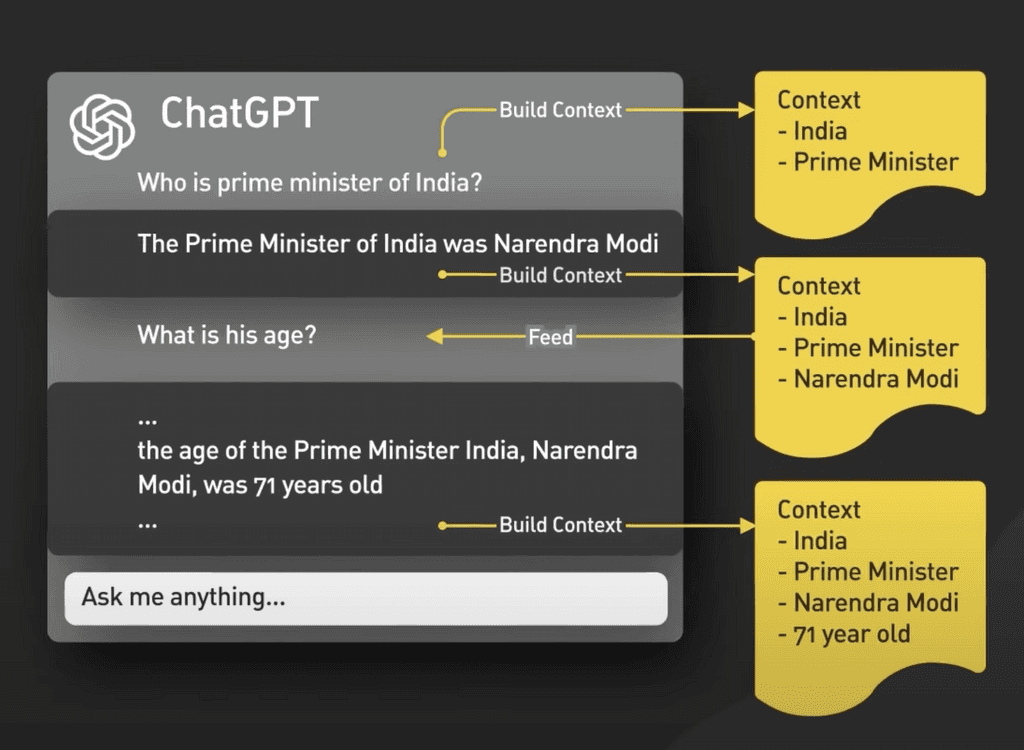
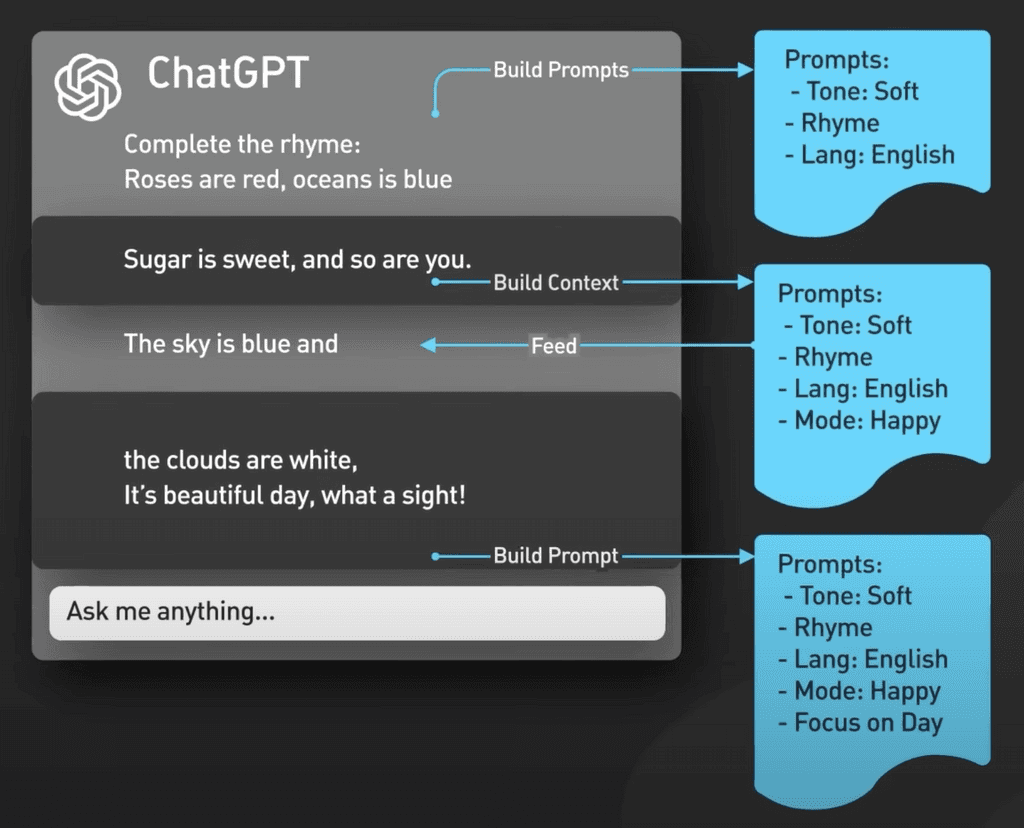
Primary Prompt Engineering
Conversational Prompt Injection
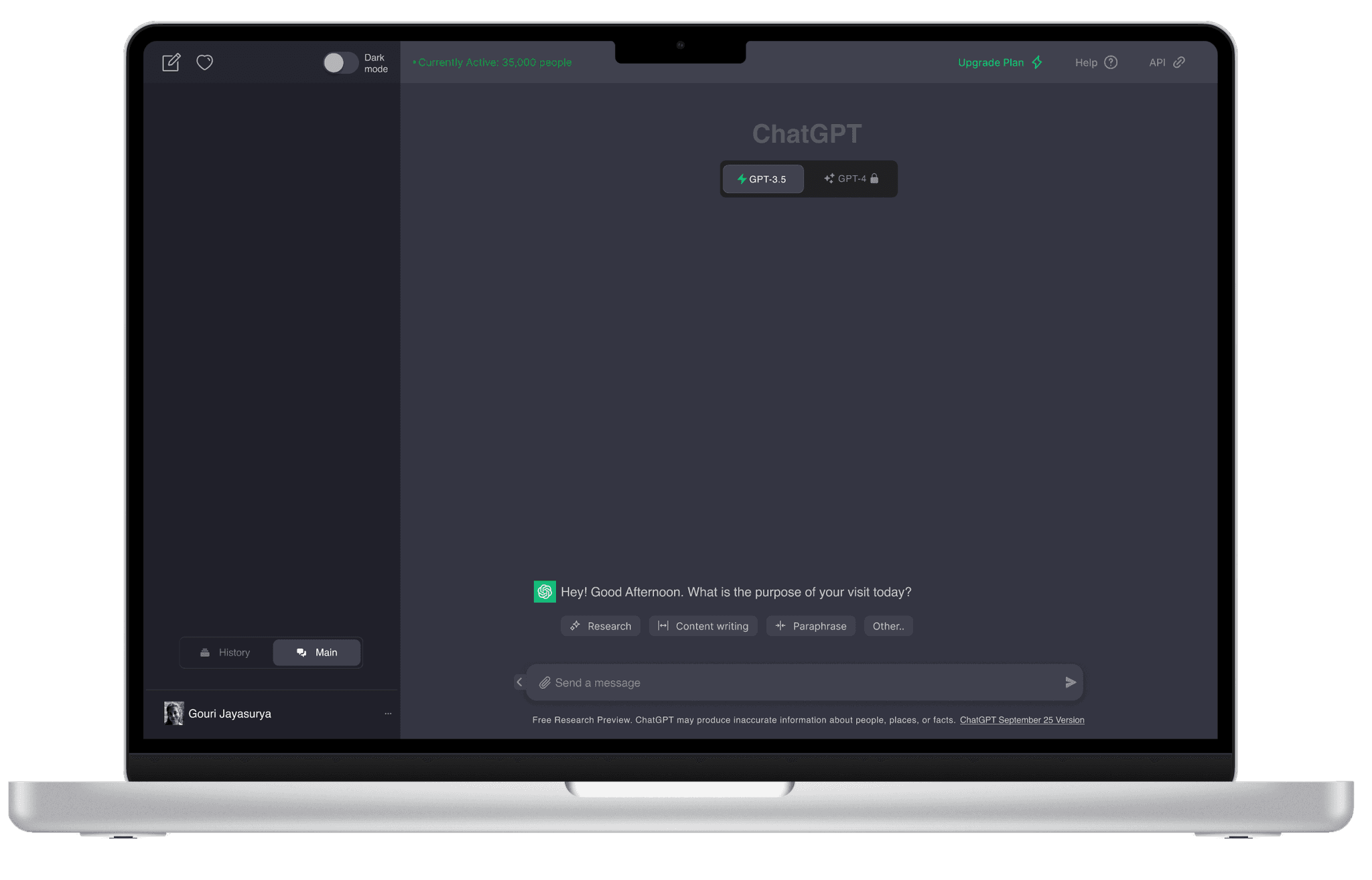
Organised-History and Main view tab
/1 Preserving Authenticity of Thought
The clutter of previous conversation wont be visible while you are interacting with ChatGPT
History view tab- features
There is a new folder feature added where conversations cane be organised and grouped by the user.
Main view tab- features
Note-taking- This space can be used to copy and paste the content you want. This gives oppurtunity for the user to edit and modify the content from GPT.
Heart it!-Users familiarity with Likes and hearts can be leveraged to access favourites/highlighted notes for ease of access
/2 Establishing purpose of Intent
First question intiated by Platform
With multitudes of context setting available (Research, Content etc.), if wanted user can define the context of the visit. This helps in giving contextual responses and removes ambiguity from users mind
Role setting
Assigning a role to GPT is an existing usage, but bring a 'call-to action' for the usage would benefit user to have a better experience
Improving the' feedback'
The top feedbacks of specific contexts can be given as call-to-action buttons.
This includes- Make test longer,shorter, change tone and translate. This provides a nudge for the user on what they are seeking next.
Download editable file
This gives power in the user's hand on what to do with the content. This also helps in keeping creativity and authenticity alive in user.
With multitudes of context setting available (Research, Content etc.), if wanted user can define the context of the visit. This helps in giving contextual responses and removes ambiguity from users mind
Context boundary creation
/3 'Seek' Data to get Data
Display Active Users online
Number of users of online will give credibility tothe user and can act as a touchpoint to gain trust
Click on the header to view and interact with the prototype
UI Interventions
Cognitive Heuristics triggered by ChatGPT
Lack of CIALDINI's SIX WEAPONS OF INFLUENCE

RECIPROCITY
SCARCITY
CONSISTENCY
LIKING
CONSENSUS
AUTHORITY
Decision making is effortful, so individuals use a lot of rules of thumb and decision-making shortcuts (heuristics) when deciding what to do, how to behave or what action to take in any situation.
Cialdini detected six principles of influence based on the psychology of persuasion that condition our behavior: Reciprocity, Commitment, Social Proof, Authority, Liking, Scarcity.
The programming of CHATGPT is heavily driven by the requests/tokens we give to it.It fails to take into account the subconscious desires and needs.
Triggering Sleeper Effect
Normal decoy
No Message
Sleeper effect
Immediate
delayed test
Persuasion
Persuasion
Immediate
delayed test
No Message
If you learn after receiving a message that the source has low credibility, at that time you will discount the message, but over time you will tend to increasingly support it. Sources that are similar to the recipient are more persuasive than those that are different.
In the case of Chat-GPT, the complex use of words and vast information architecture, influences the user to support it further.
The presence of the media interface of ChatGPT will cue users to apply the mental shortcut that ChatGPT is more accurate and objective compared with humans, thereby shaping their perceptions and evaluations of the communications attributed to that source.
Triggering Machine Heuristics
Final Output not justifying the Initial thought of user
BEHAVIOUR
AFFECT
TRIGGER
Initial perceptions-casual
and quick responses
Mediocrity
Change in confidence of prompt writing skills after the first prompt
BEHAVIOUR
AFFECT
TRIGGER
Post initial prompt - lack of awareness of effective interaction with GPT
Sense of self is getting depreciated- Autonomy,
Honesty, etc.
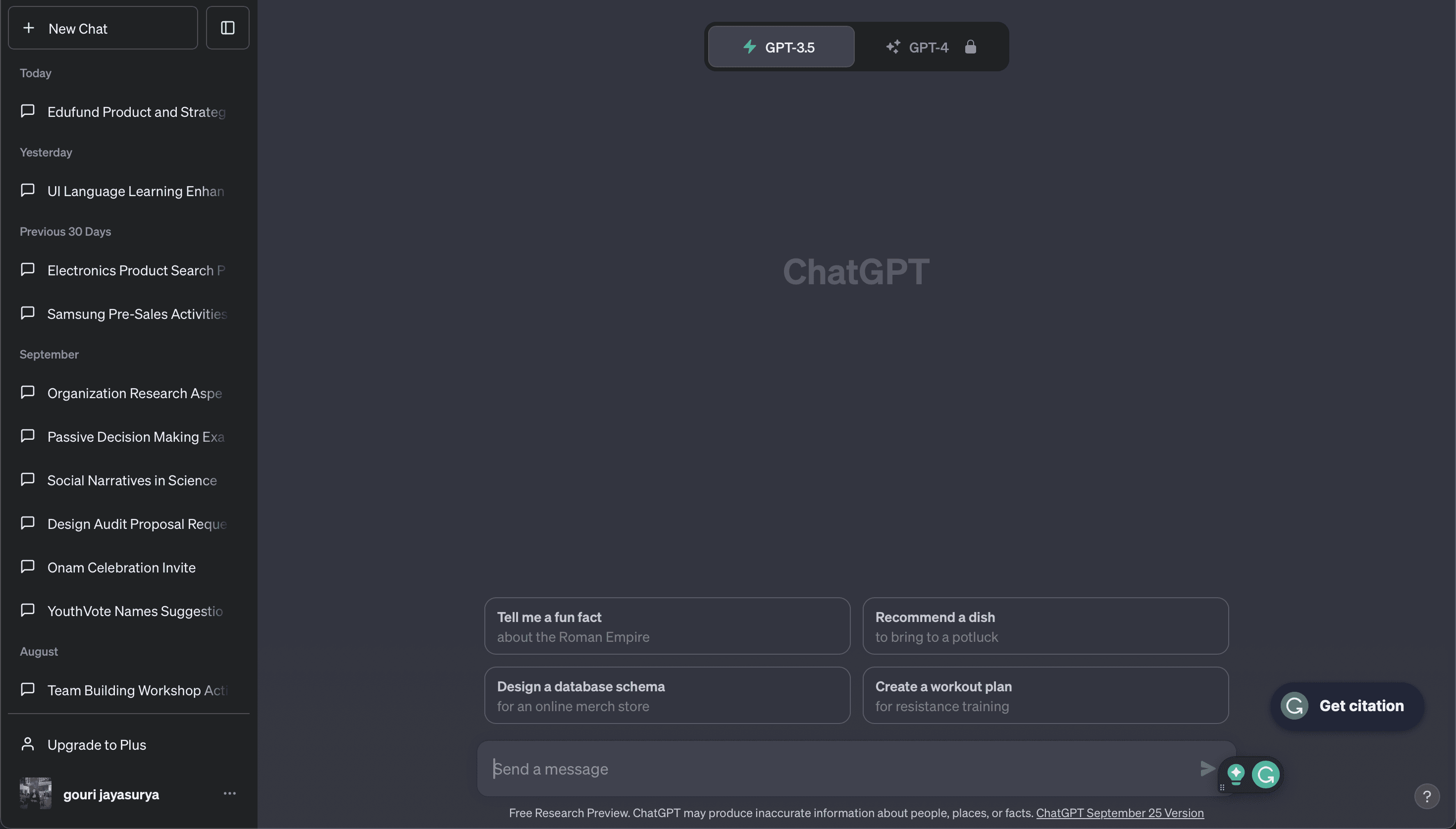
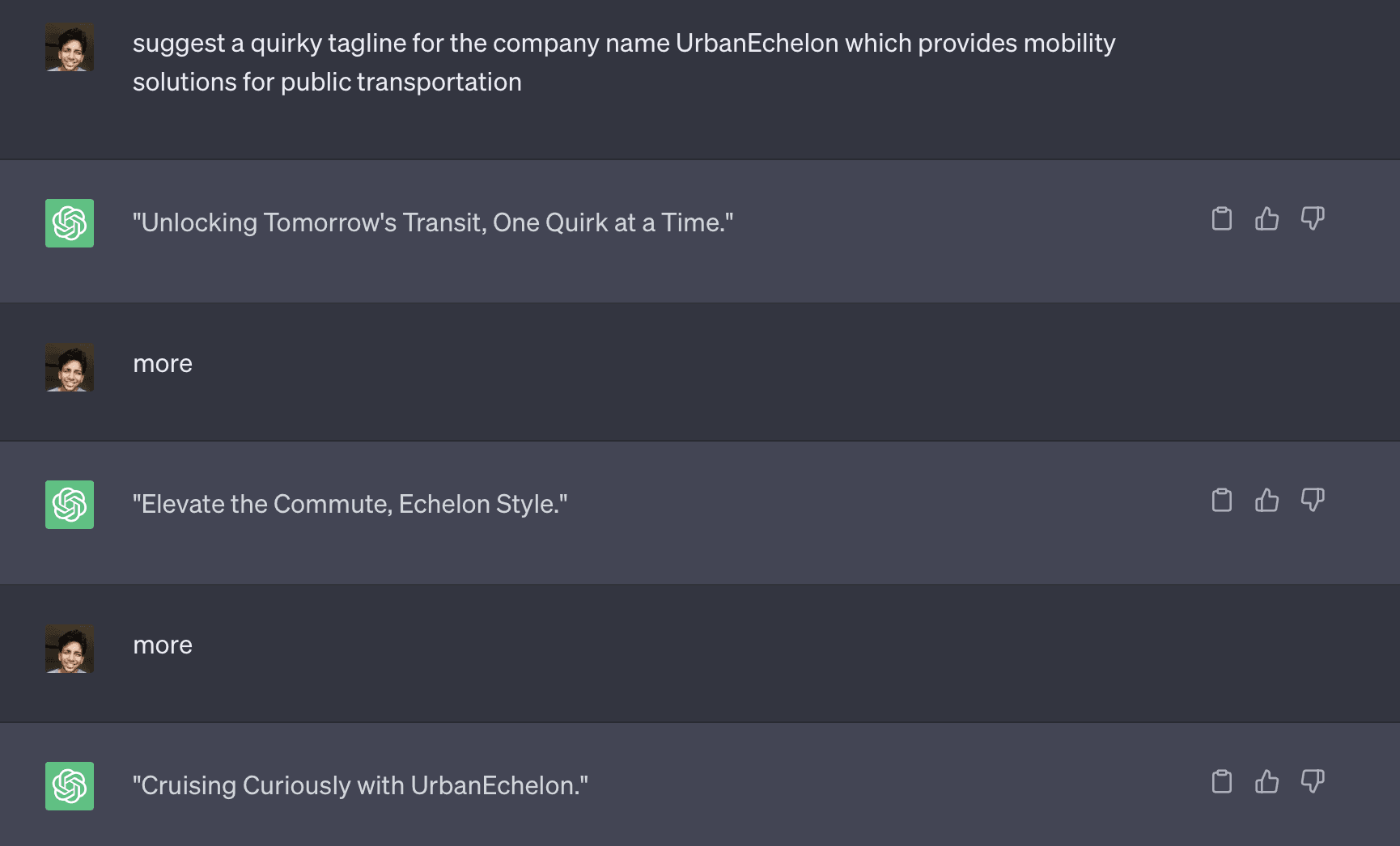
Irregularity in Interaction tone and language as the interaction progresses
BEHAVIOUR
AFFECT
TRIGGER
Pre-conceived notions
of self-capabilities
Frustration build up
Low self-confidence
Unable to capture the full essence of the user’s intent
Unable to find out or recall a previous conversation
BEHAVIOUR
AFFECT
TRIGGER
Visible History panel on opening, expectations of user from virtal Interfaces
Frustration build up
BEHAVIOUR
AFFECT
TRIGGER
lack of highlighting the sources of Information, Curated responses
Usage of Information from ChatGPT as the ultimate truth/ Higher power for ChatGPT over your thoughts
Loss of self worth, autonomy, critical thinking
Failure to highlight the source of Information more effectively
Unable to capture easy recall interface elements known by the user
copy pasting the response as it is
BEHAVIOUR
TRIGGER
Urgency, Trust on the platform
AFFECT
Mediocrity,
Lack of creativity
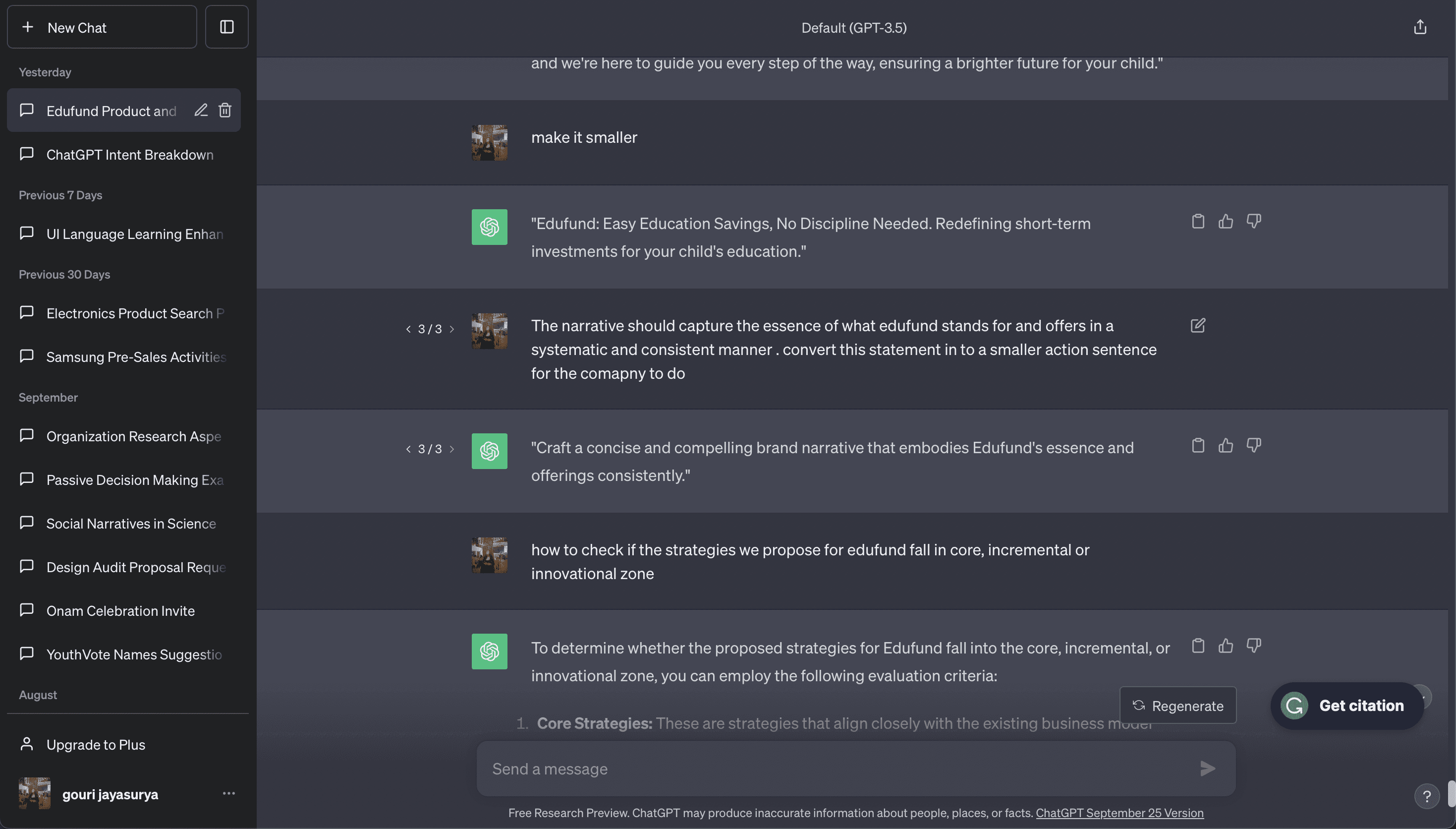
Lacking to highlight GPT as medium of information rather than a source
Failure to capture holistic feedbacks from user
/ Platform Analysis
Behavioural Mapping

Netnography
Netnography has its roots in ethnography. It's a qualitative way of analysing social interactions in the contemporary digital communication context. We analysed previous chat history and live interactions of users with ChatGPT.As ChatGPT is a User-need driven platform- this tool helped uncover preliminary research points to further explore
/ DIP STICK RESEARCH
User Interaction Expectation- 'Creepiness'
/ INSIGHTS
People tend to feel eerily disturbed when they encounter unknown people, situations, and technologies. We define “creepiness” here as a feeling of discomfort & ambiguity that is experienced when a user is not sure how to interact with AI.

Perception of ChatGPT to be an ultimate 'source' of information
Seeking validation from a non-human entity
Believing they are eliminating subjectivity
Seeking belongingness in an intellectually driven society
Clueless about what went wrong in their prompts
Awareness of limitation vs Usage with awareness
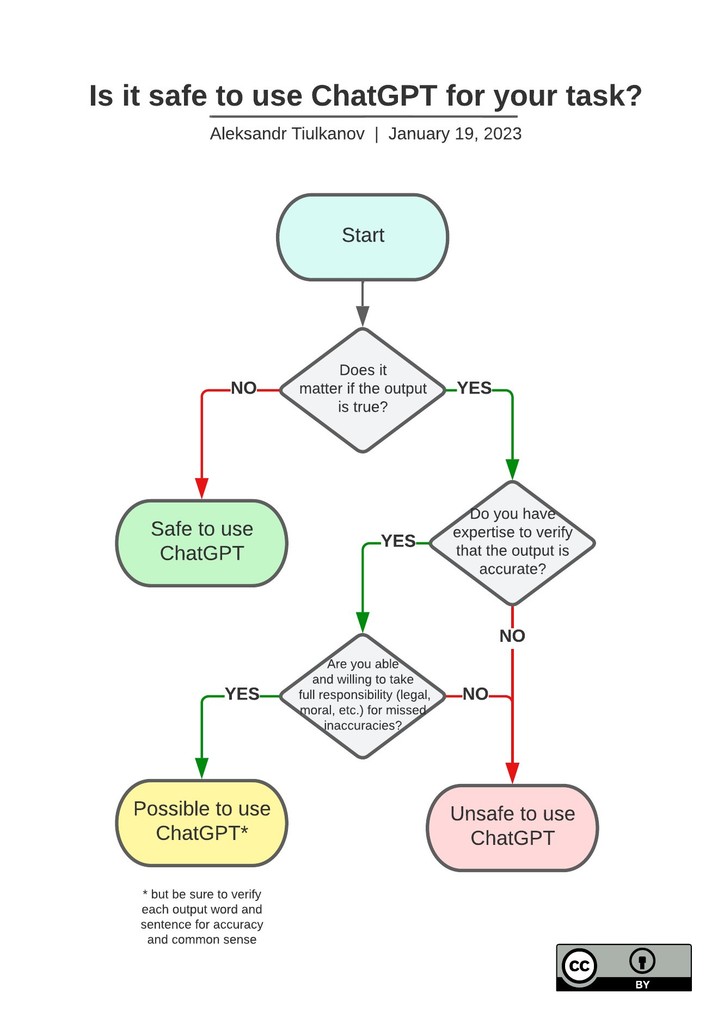
Often, users who do possess
awareness about the credibility of the content generated from ChatGPT, seem to continue using ChatGPT due to multiple internal and external factors.External factors being matching upto social stakes by making the content sound more intelligent. Internal factor leading to confirmation bias is further explored in the study
Urge to display signs of Intelligence

Quicker/earlier outputs
Being vocal
Jargon filled/ complex words in sentences
Amount of Information conveyed
Precision, accuracy and flexibility
With the arrival of ChatGPT, a time before its existence seemed to be forgotten. Users often rely on it on a multitude of levels to adhere to match up to the intelligence they believe others showcase. With machine heuristics, adding to this,users start to develop a dependency with the platform

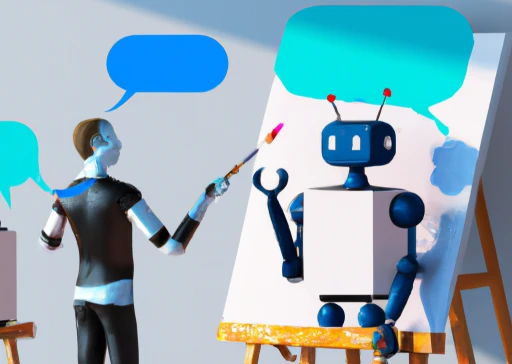
All the content in this poster has been created by GenAI
Adobe firefly, Adobe Photoshop-Generative fill
Virtual behaviour Mapping | UX strategies | UI Design | Human- AI Interaction
Re-imagining ChatGPT:
Learning the ‘language’
of humans
Re-imagining ChatGPT:
Learning the ‘language’
of humans
In the dynamic landscape of AI interaction, there exists a notable sense of uncertainty and ambiguity. This evolving relationship between machines and humans is giving rise to many untapped behavioural patterns arising from the our existing mental models and expectations from both our real life and virtual interactions.
This study aims to realign the ways to look at user interaction with ChatGPT through the lens of social behaviour psychology. This design research project focuses to demystify the nuances of Human-AI Interactions and focus on promoting user autonomy and empowering Gen-AI experiences
**Please note the research is done on the GPT-3.5 version and done in Sept,2023. All the strategies suggested are in accordance of the capabilities of ChatGPT existed during the time.
Academic Project with 2 other team mates
Introduction:
Team & Role:
2 weeks

Stimulation
Semi-structured Interview
Timeline:
Focus Group
(25 Partcipants)
Netnography
Research Tool Kit
Key findings
Users perceive ChatGPT as a ‘source of knowledge’ rather than a ‘medium of knowledge’ transfer.
A user's reliance on ChatGPT is linked to their confidence in their abilities and awareness of their own intelligence.
Even after having low trust in the platform, users conform to the platform due to the external validation users get for the outputs generated by AI
A sense of lack arises in the user due to the social comparison of AI-Generated output in our current social structure