God-centric

to
Human-centric
Uncovering the deviances hindering an enhanced spiritual experience
Location: St.Xavier’s Cathedral, Gandhinagar
Time: Sunday, 9:30 am
The loud sound of bells ringing echoed from the bell tower just outside of the church. People entered the church with more urgency as the bells continued to ring. The crowd is always chirpier on Sunday masses as compared to weekends. Since we became frequent visitors of the masses over the past month, few recognisable faces acknowledged our presence. As the prayers began, the premise tranforms into a field of triggers, nudges and cues to immerse, engage and may be even distract you!
We often fail to acknowledge how our behaviour and actions are decided on the unsaid rules set by the society and people around us. Apart from these everyday norms, religion and faith have a very strong influence on why we do, what we do. We were tasked to study the behavioural nuances of people in a selected premise and further deep dive into identifying ‘irrational/deviant behaviour’ exhibited and further suggest strategies facilitate a positive behaviour change in the premise. As we decided to choose ‘The Church’ as our study’s premise, the ‘irrationality in behaviour’, emerged as a layered concept intertwined with beliefs, presumptions and sometimes even fear.
Through this project, we try to critically examine and make sense of macro and micro behaviours observed in a place where focus is needed to achieve the primary objective of being there; in this case, the place being a Church. The study would lead us to the cause of the behaviour that will give us the opportunity for behaviour change.The presence of authority, social conformity, and religious bias added to the complexity that comes with religious spaces, making sure we were always on our toes. But the behaviour observed in the setting can also be identified in other social settings. The insights from the study can be applied to all of those too.
Introduction:
4 weeks
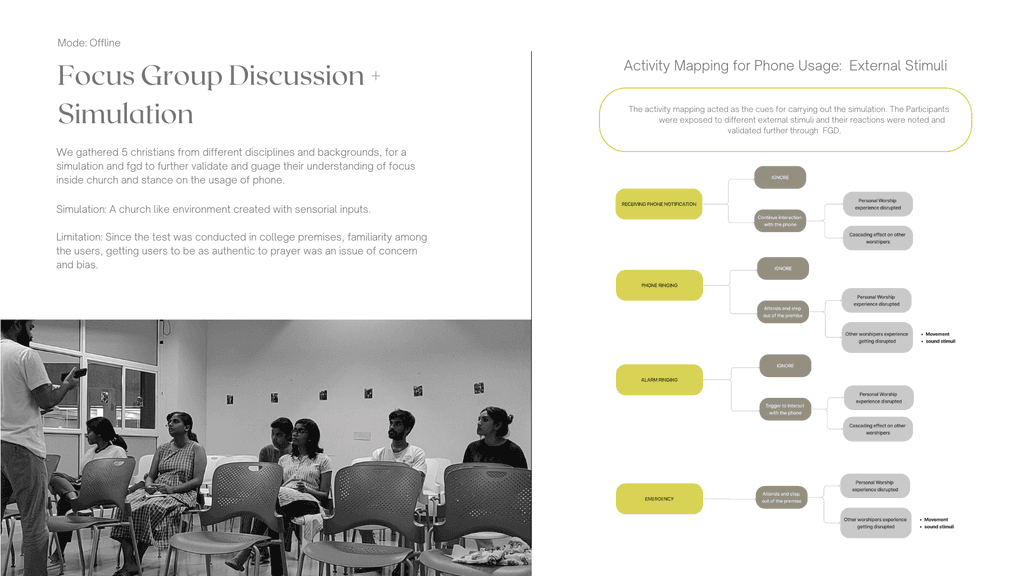
Stimulation
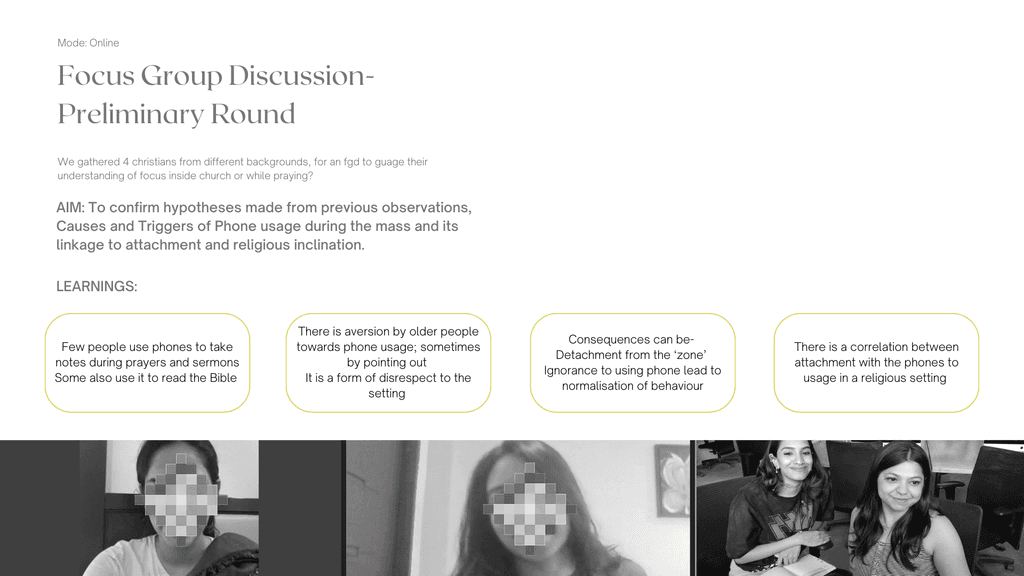
Focus group
Semi-structured Interviews
Research Tool Kit
Research Objective
Identification of deviant human behaviours in a religious setting and the causes for them.
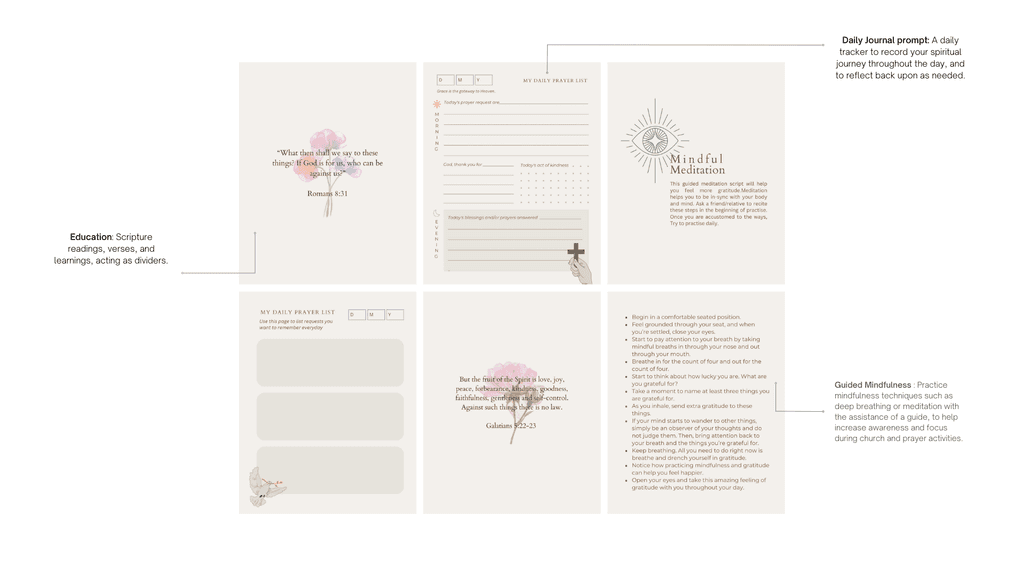
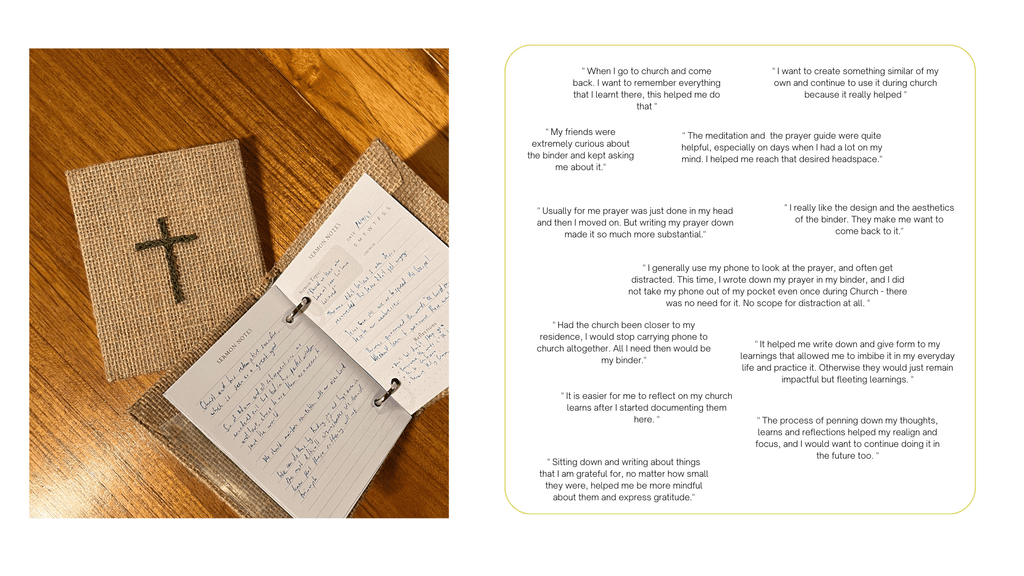
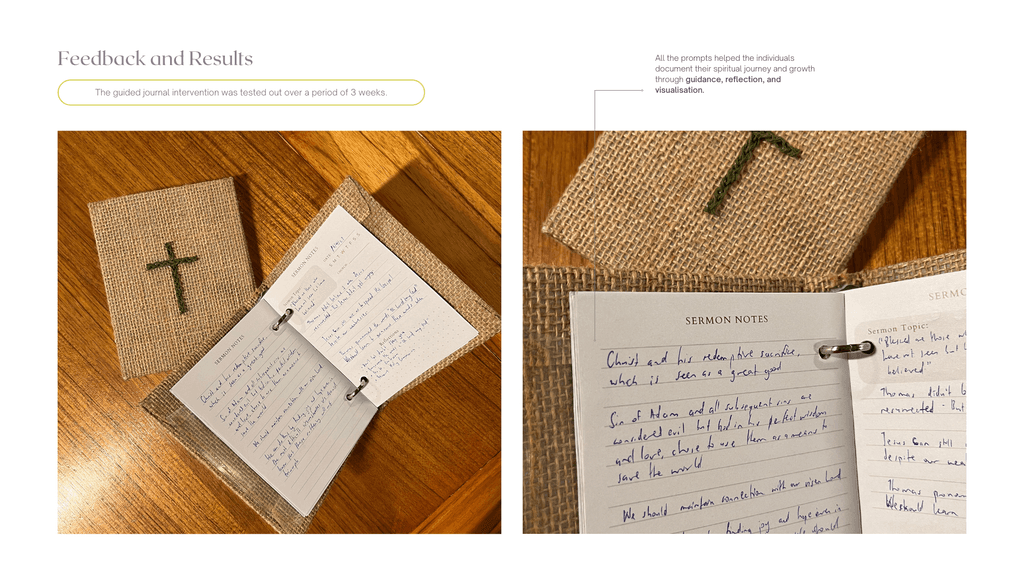
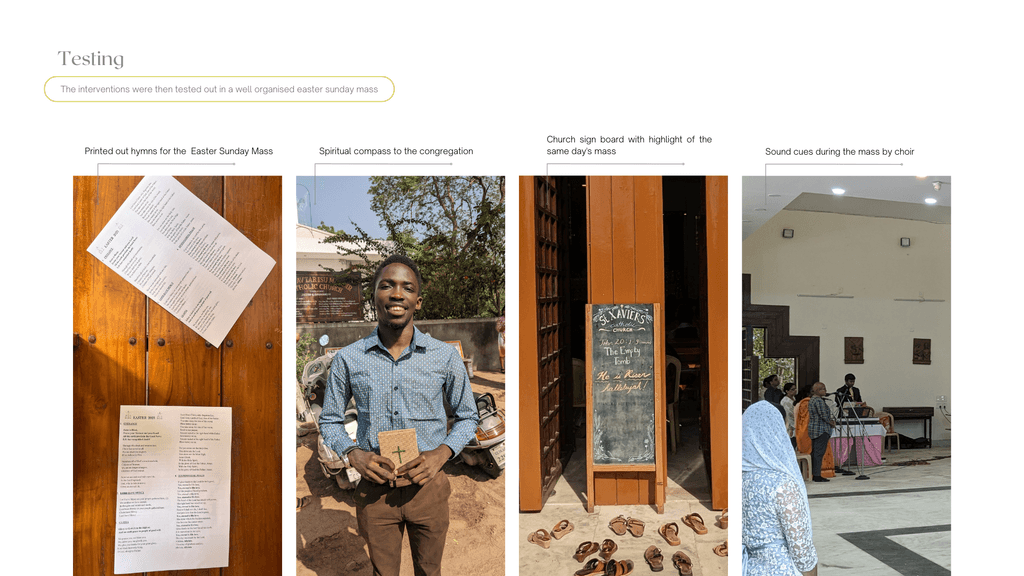
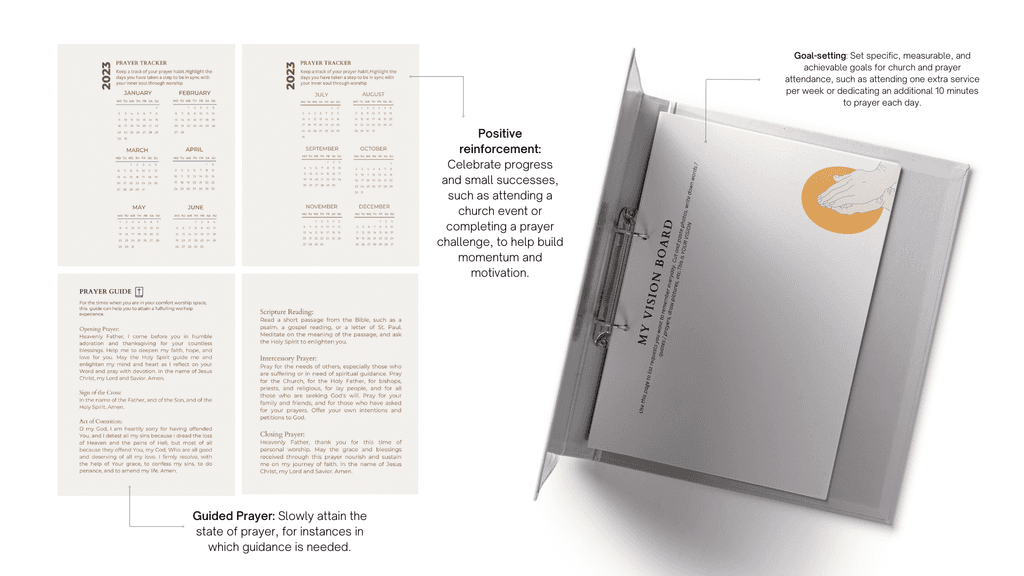
Interventions to nudge a behaviour change in the deviant behaviours and provide an enhanced spiritual/religious experience
Timeline
Design researcher along with 4 other team memebrs
Team and role
Read about my learnings in my Medium Article
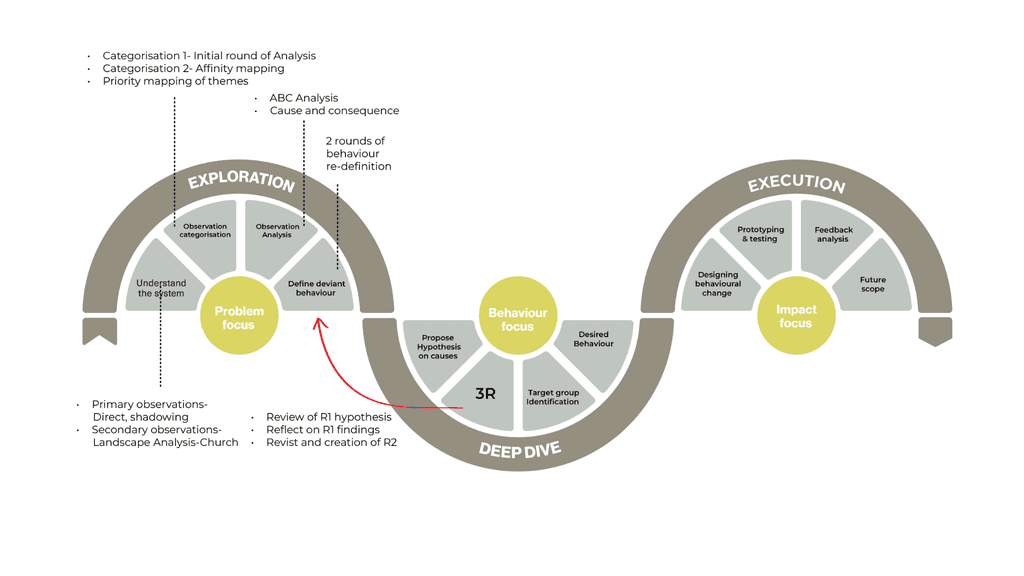

Research Pipeline
- Est. 1990,Gandhinagar Catholic Dias Community
- 300 Catholic Syrian Families in & around Gandhinagar
- Timings Masses in Gujarati and Malayalam
- The spatial, architectural, and sensory stimuli ofthe internal and external parts of the church are hugelyaffected by Christian rituals and legacy.
As we decided to take 'church as our premise, we were deeply fascinated by how humans act and behave in a social setting where the layers of social rules are overpowered by Authority. As behaviours doesn't exist in singularity efforts to draw parallels between similar premises driven buy authority are attempted through this project
Observing and Capturing interactions in the premise
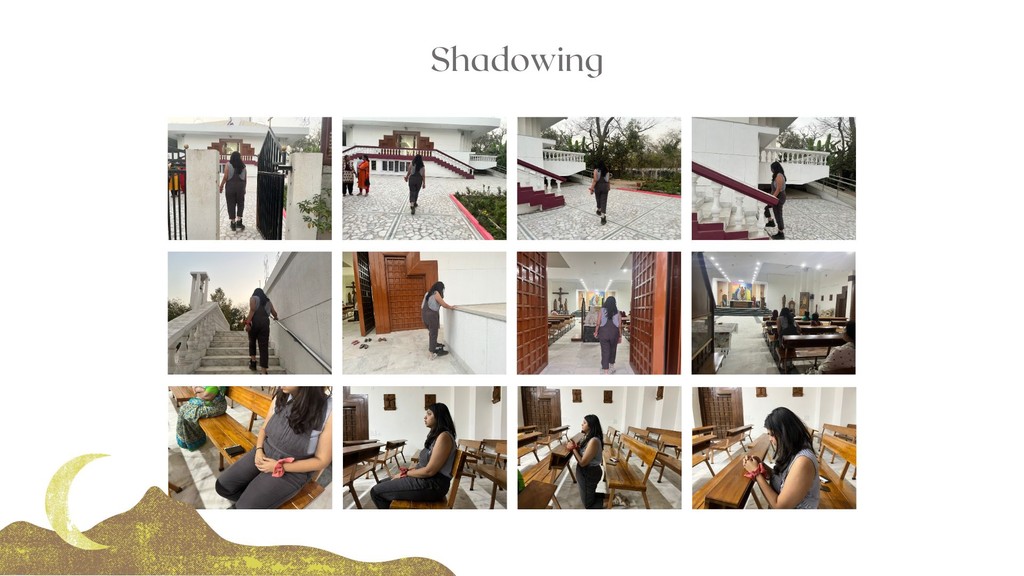
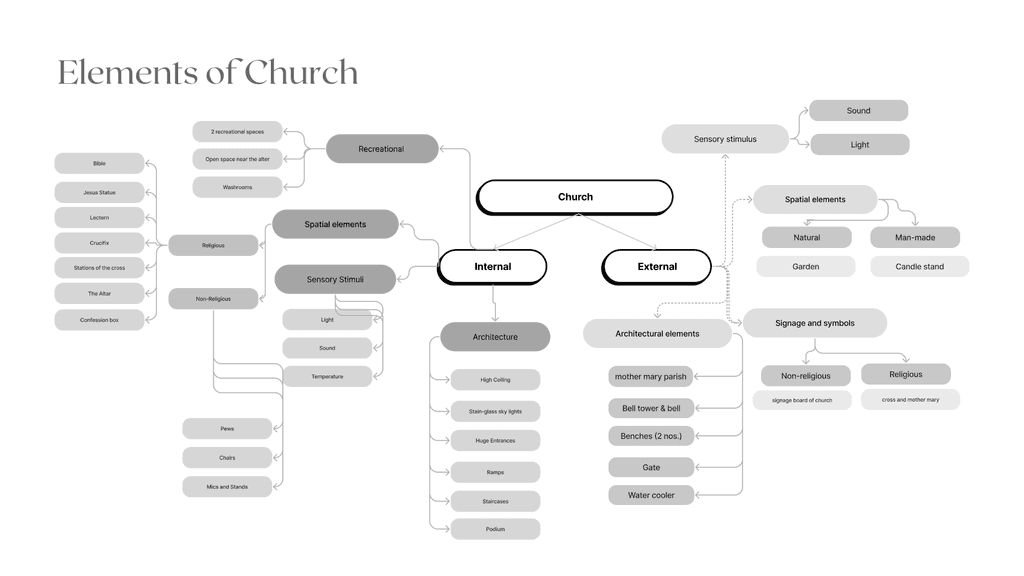
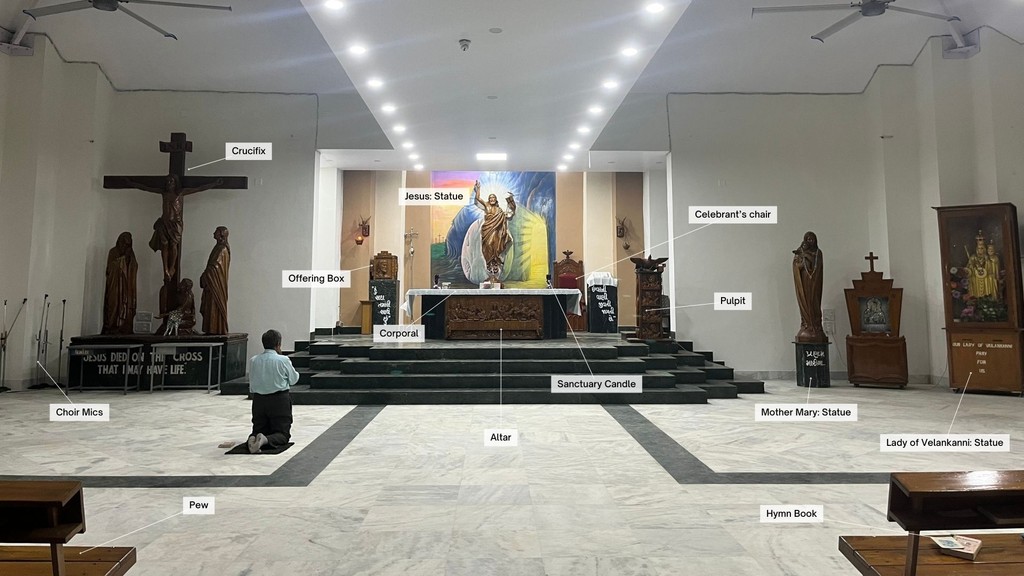
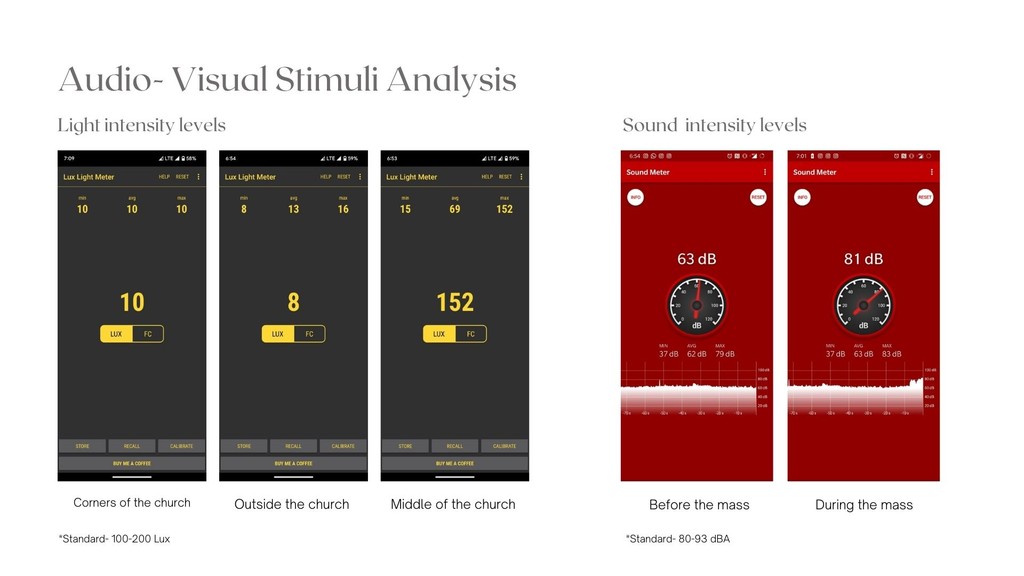
Over the course of 4 weeks, to capture initial observations, multiple tools and techniques were explored:-
Shadowing- Mapping age group flows
Audio & visual stimuli analysis
Mapping elements of church with the emotions triggered
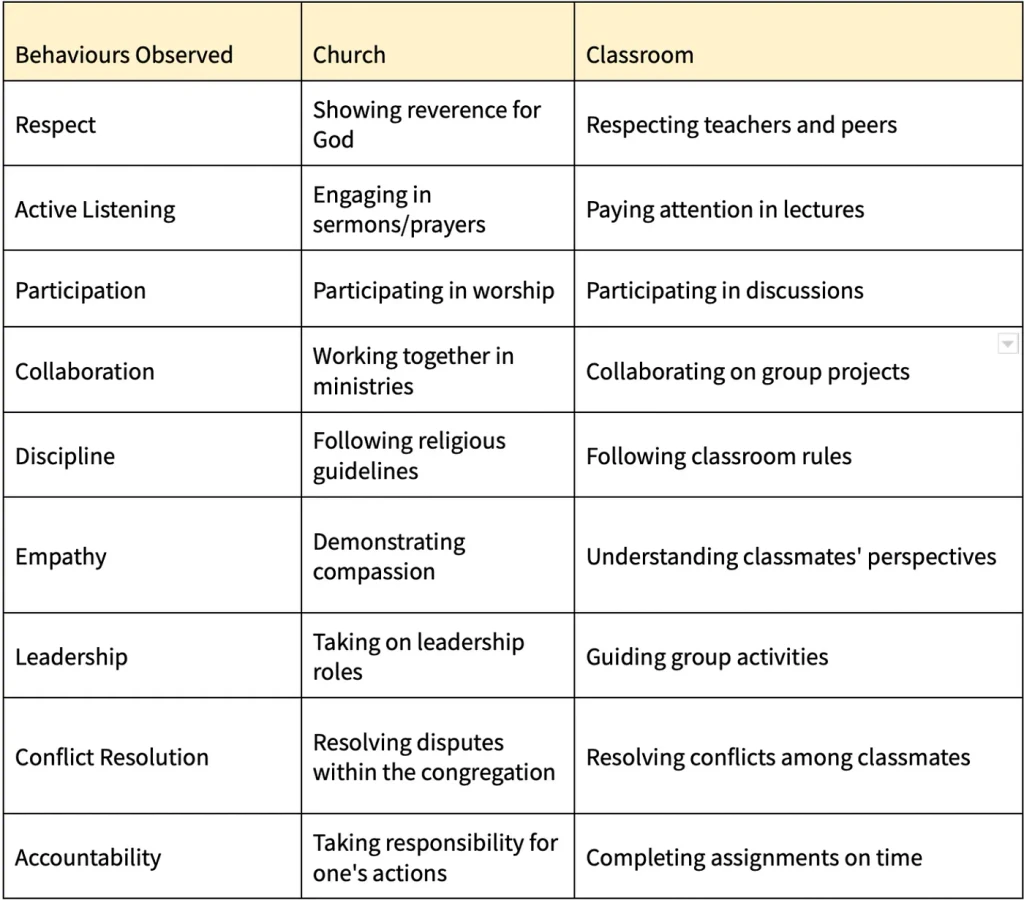
In the realm of human behaviour, it is fascinating to observe how certain patterns and tendencies persist across different premises. Behaviour, often shaped by a combination of individual disposition and external factors, can extend its influence beyond a specific context. The Above table draws similarities in the target behaviours observed in church with that of a classroom. The reasons why the classroom as a premise triggers similar behaviours/attitudes to that of a church:-
Both premises are driven and controlled by authority. In the case of the classroom that would be a teacher and in the case of the church that would be the priest who is preaching.
While in the classroom attention is required to seek knowledge, in the church, attention is required to pray.
Both the premises demands a long duration of undivided attention from the people present.
The Big Picture
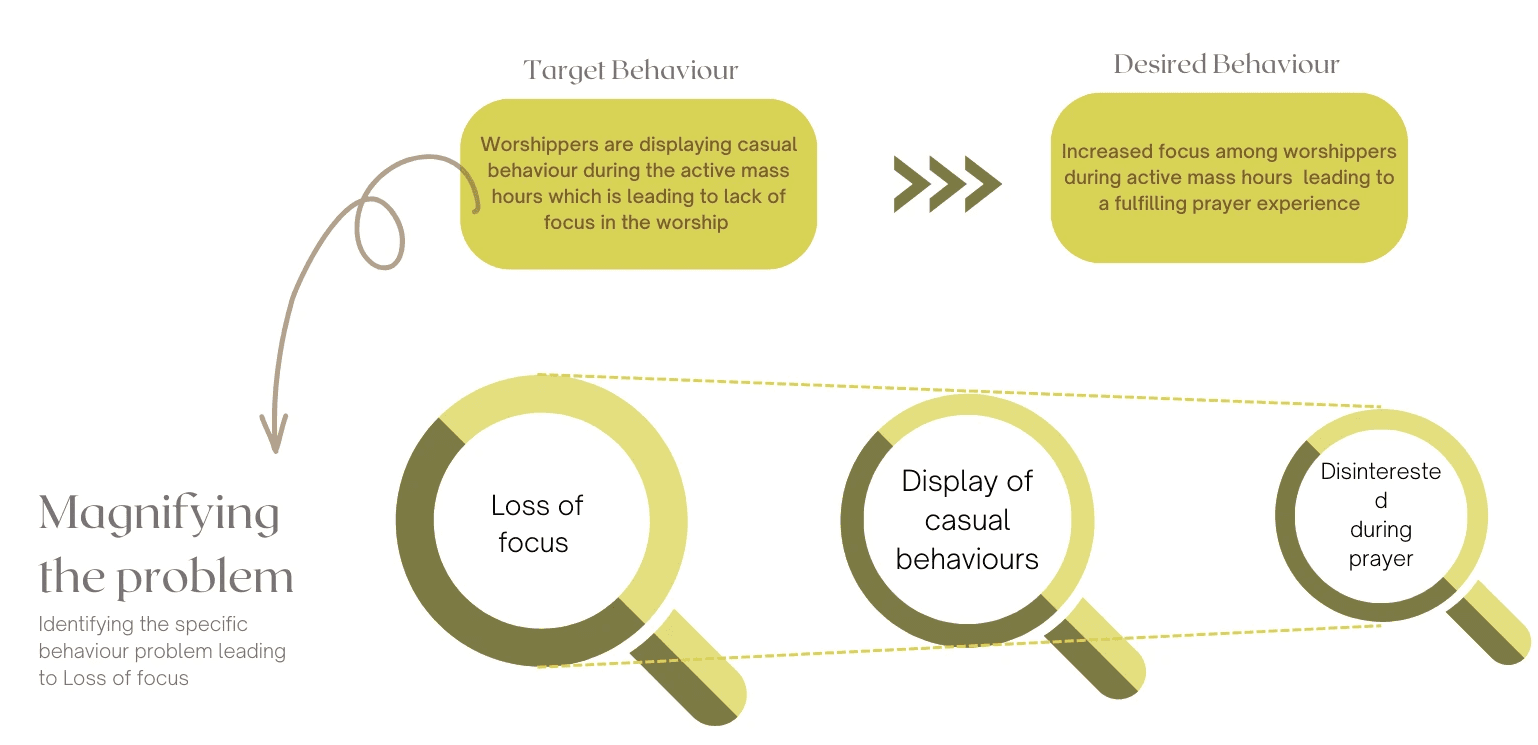
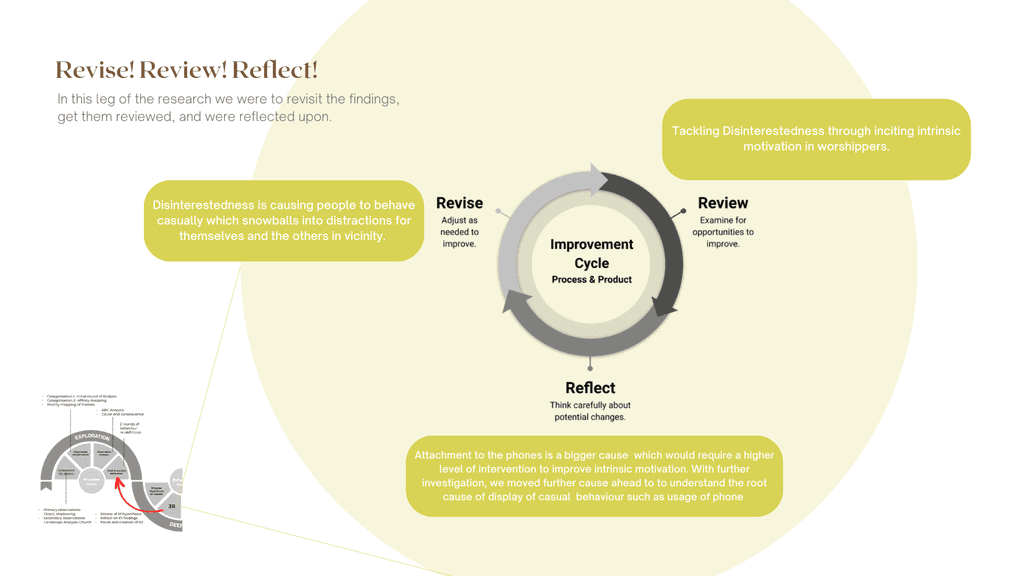
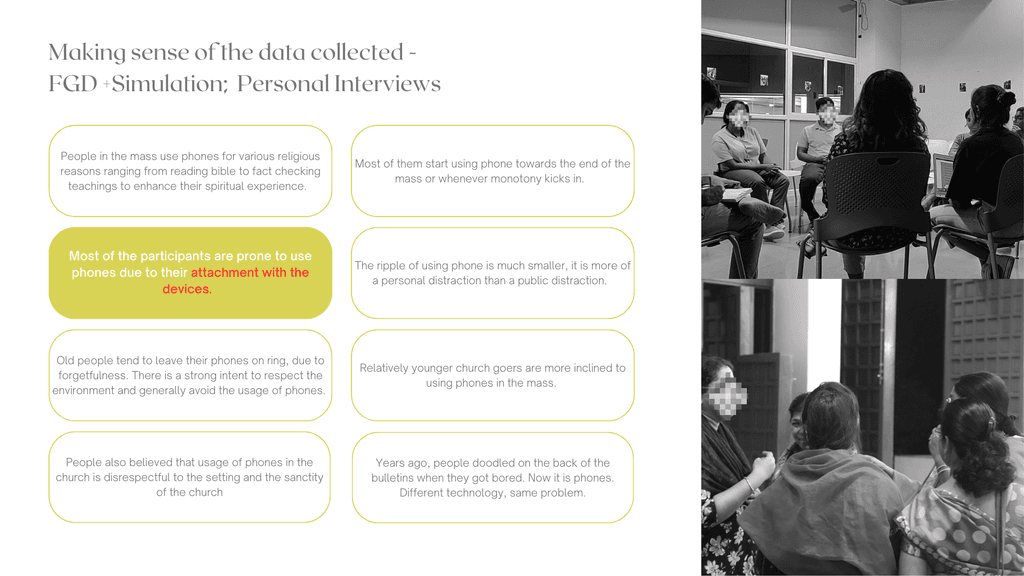
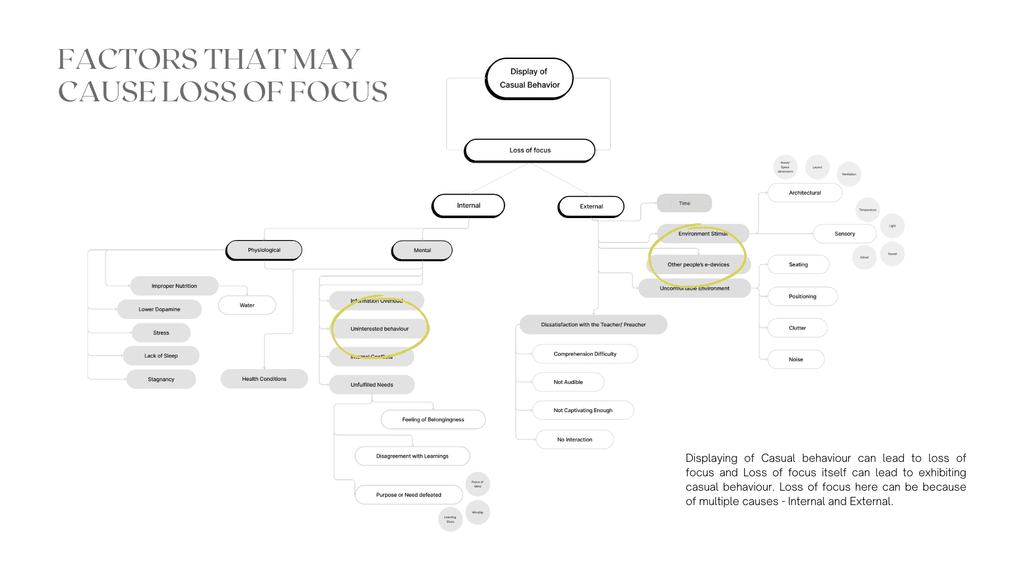
CAUSES
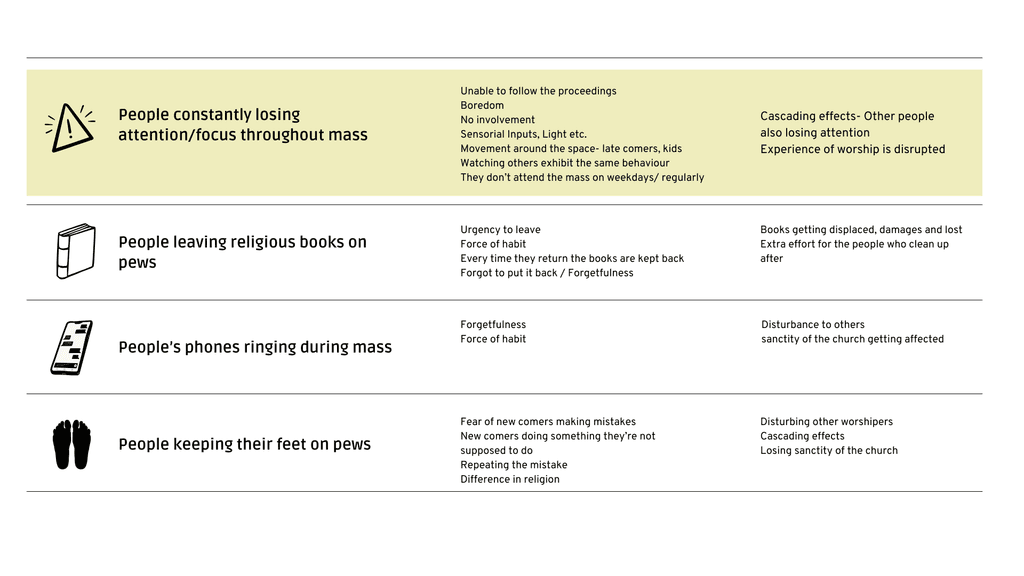
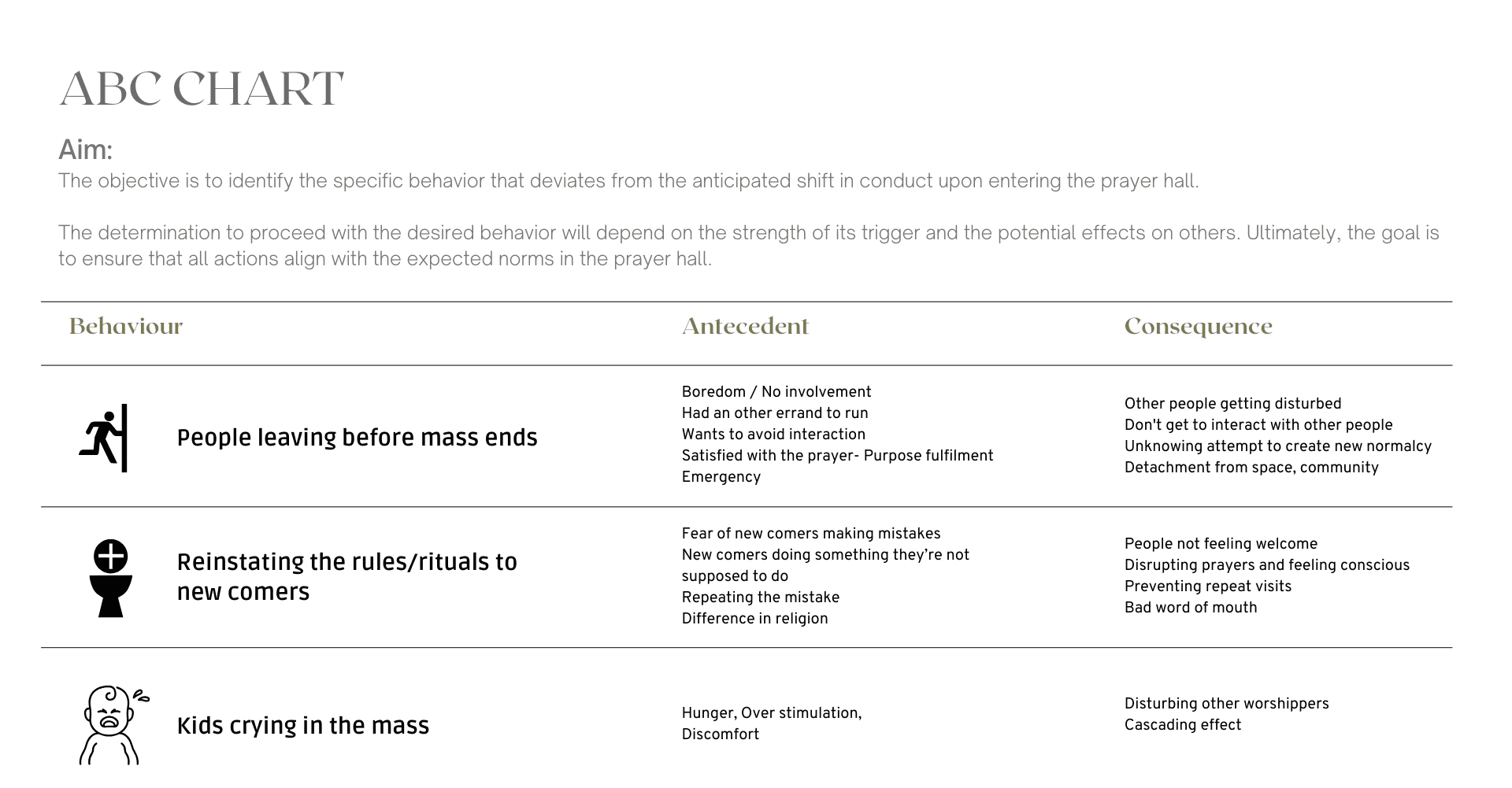
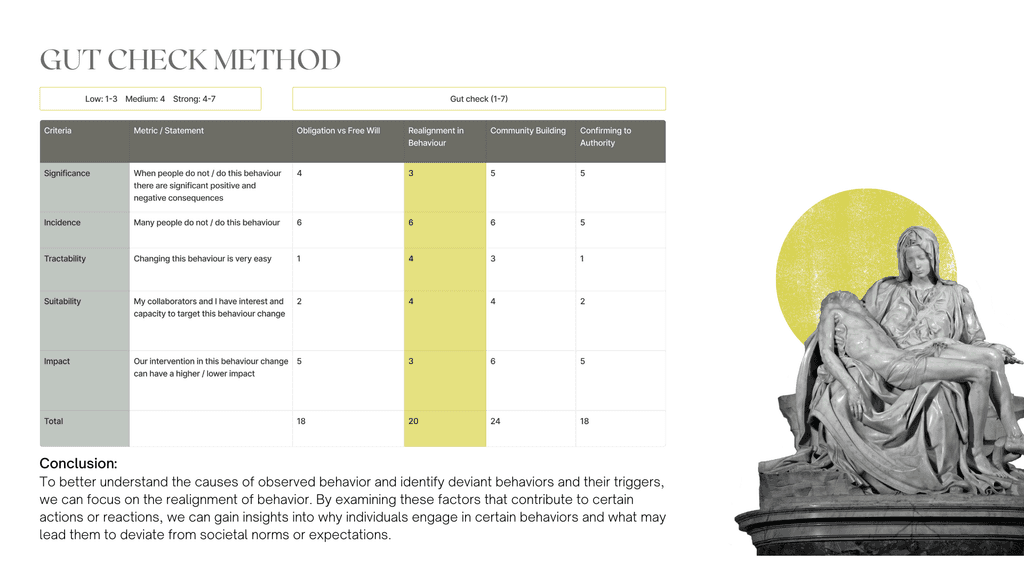
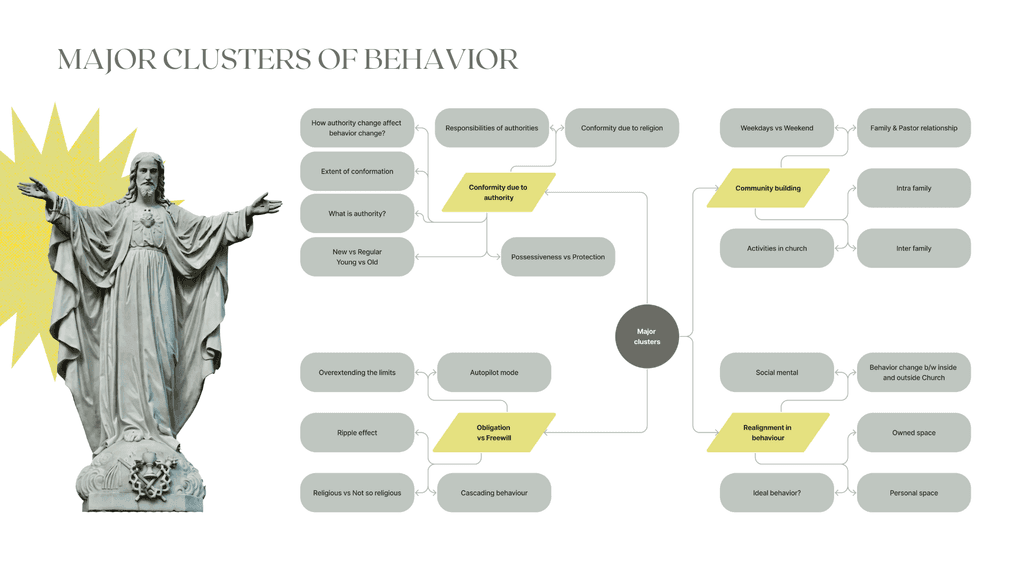
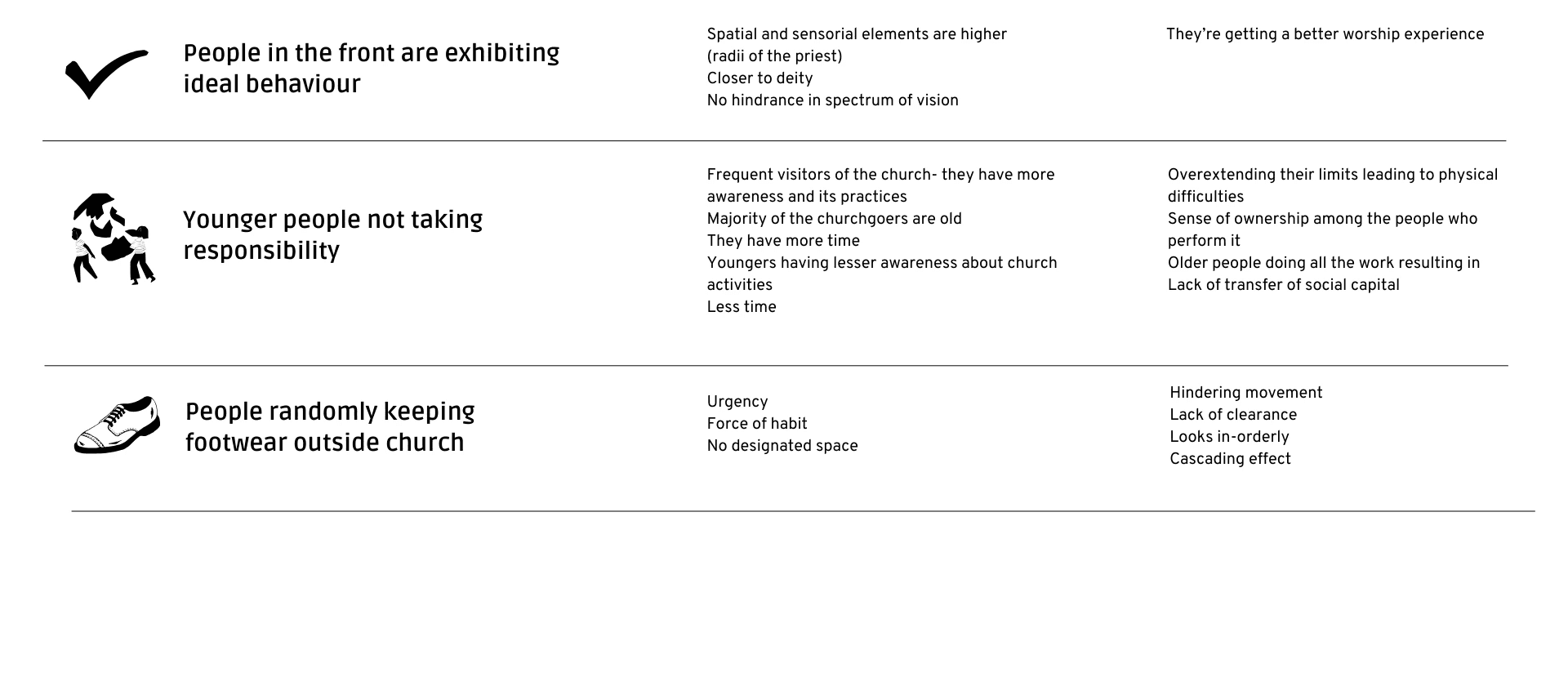
BEHAVIOUR
EFFECT